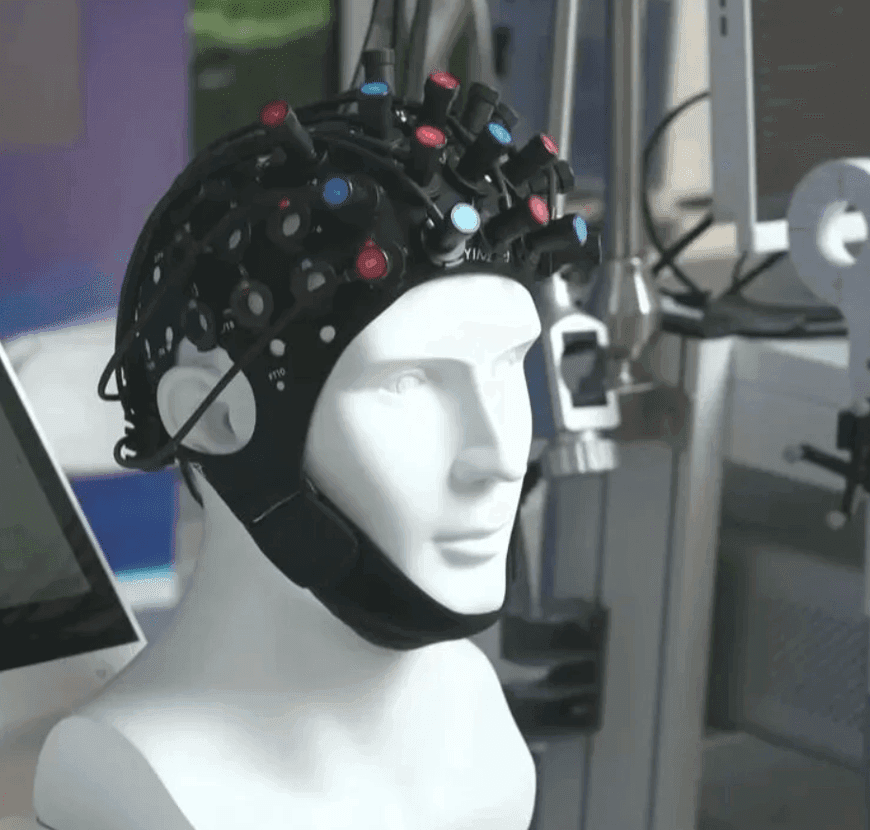
The Shenzhen Institute of Advanced Technology of the Chinese Academy of Sciences showcased a noninvasive ultrasound brain-computer interface at an industry conference in Shenzhen this week.
This system functions by sending precisely targeted ultrasound into the brain without the need to implant electrodes or open the skull. Researchers stated the technology can write regulating signals into brain circuits to potentially activate the brain's own ability to rewire and rebuild inactive or damaged neural pathways. Thirteen of the 24 participants showed clear improvements in conscious behavior.
The treatment protocol required participants to undergo three 20-minute sessions every week for a duration of four weeks. One specific patient who had been unresponsive for three months following a brain hemorrhage regained consciousness after 30 days of ultrasound treatment. Following rehabilitation, that patient is now able to eat independently, hold conversations, and walk with assistance.
Researchers said the intervention can be tailored to various conditions, such as epilepsy, where ultrasound suppresses overexcited brain regions firing at high frequencies. For depression, the team said the technology modulates emotional regulation circuits that involve imbalanced circuits.
In cases of disorders of consciousness, researchers said repeated rounds of gentle ultrasound aim to help networks gradually recover where communication between the thalamus and the cerebral cortex is impaired. While the epilepsy and depression applications remain at the intervention research stage, the researchers presented focused ultrasound as a new path within the noninvasive category.
No regulatory approval for the technology was mentioned during the presentation.