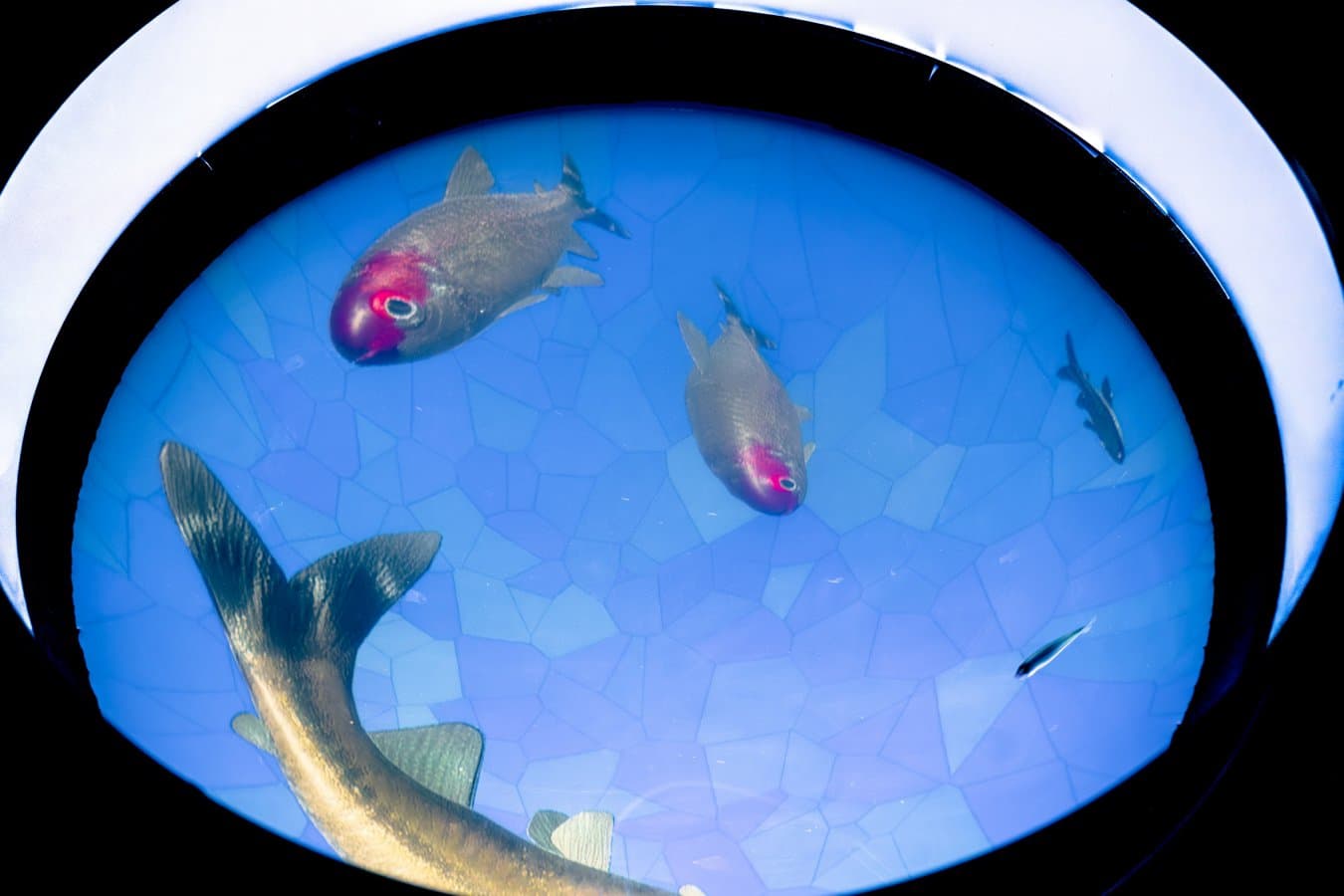
The team placed a single tetra fish inside a hemispherical bowl and used a camera to track its movements while projecting four virtual fish onto the interior surface.
A feedback loop connected the camera and the projections, enabling the virtual fish to react and adjust their behaviour based on the real fish. Researchers discovered that the real tetra fish perceived only one most influential fish at any given time.
“By focusing on just one neighbour, the fish reduce their sensory and cognitive demand,” Guy Theraulaz said. Theraulaz noted that while a fish in a group can perceive many individuals simultaneously, perception does not equate to influence.
Iain Couzin at the Max Planck Institute of Animal Behavior in Germany said the study confirms previous ideas about tetra behaviour pioneered by Theraulaz and his colleagues. Couzin added that the research highlights how virtual reality could eventually help scientists understand the decision-making processes of animals.
Guy Amichay at Northwestern University in Illinois said, “You could technically design any virtual world you want.” Theraulaz and his colleagues plan to expand the experiment by programming some virtual fish to behave as if they are stressed by a predator.