Key Takeaways
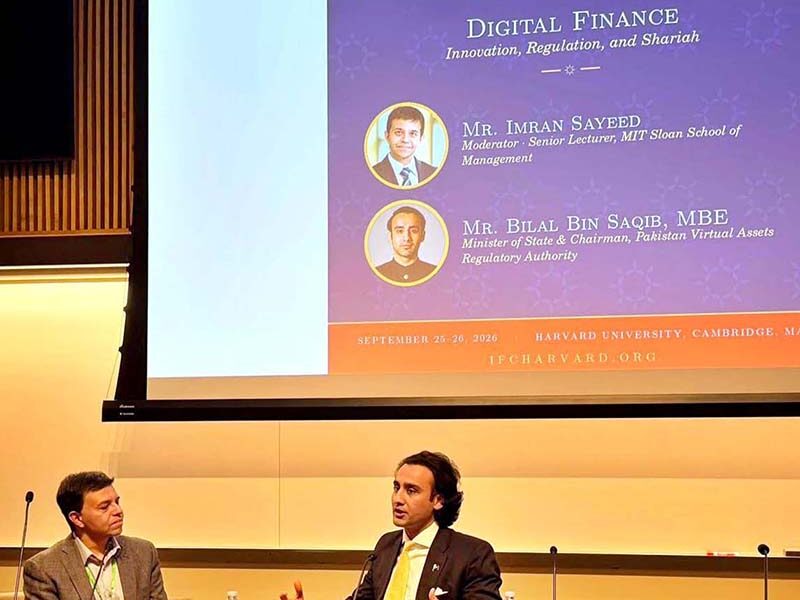
- Bilal Bin Saqib, Pakistan’s Minister of State and Chairman of the Virtual Assets Regulatory Authority, spoke at the Harvard Islamic Finance Conference.
- He discussed the transformative potential of blockchain technology for the Muslim world.
- The conference focused on the role of blockchain in financial innovation and regulation.
Bilal Bin Saqib, Pakistan’s Minister of State and Chairman of the Pakistan Virtual Assets Regulatory Authority, addressed the Harvard Islamic Finance Conference, emphasizing the transformative potential of blockchain technology for the Muslim world.
In his speech, Saqib highlighted how blockchain can enhance transparency, security, and efficiency in financial transactions, particularly relevant for the Islamic finance sector.
He noted that blockchain technology aligns with the principles of Islamic finance, such as prohibition of interest and risk-sharing, making it a promising tool for innovation.
Saqib also discussed the regulatory challenges and opportunities that blockchain presents, stressing the need for a balanced approach to ensure both growth and stability.
The conference, attended by experts from academia, industry, and regulatory bodies, explored the intersection of blockchain technology and Islamic finance, with a focus on its potential to drive financial inclusion and economic development.
Participants engaged in discussions about the integration of blockchain in various financial services, including trade finance, supply chain management, and digital currencies.
Saqib’s presentation underscored the importance of collaboration between governments, private sectors, and international organizations to harness the benefits of blockchain technology.
He called for a collaborative effort to develop a framework that supports the ethical and sustainable use of blockchain in the Muslim world, ensuring that technological advancements benefit the broader community.