Key Takeaways
- Planning Minister Ahsan Iqbal unveiled plans to transform CAREC routes into economic corridors.
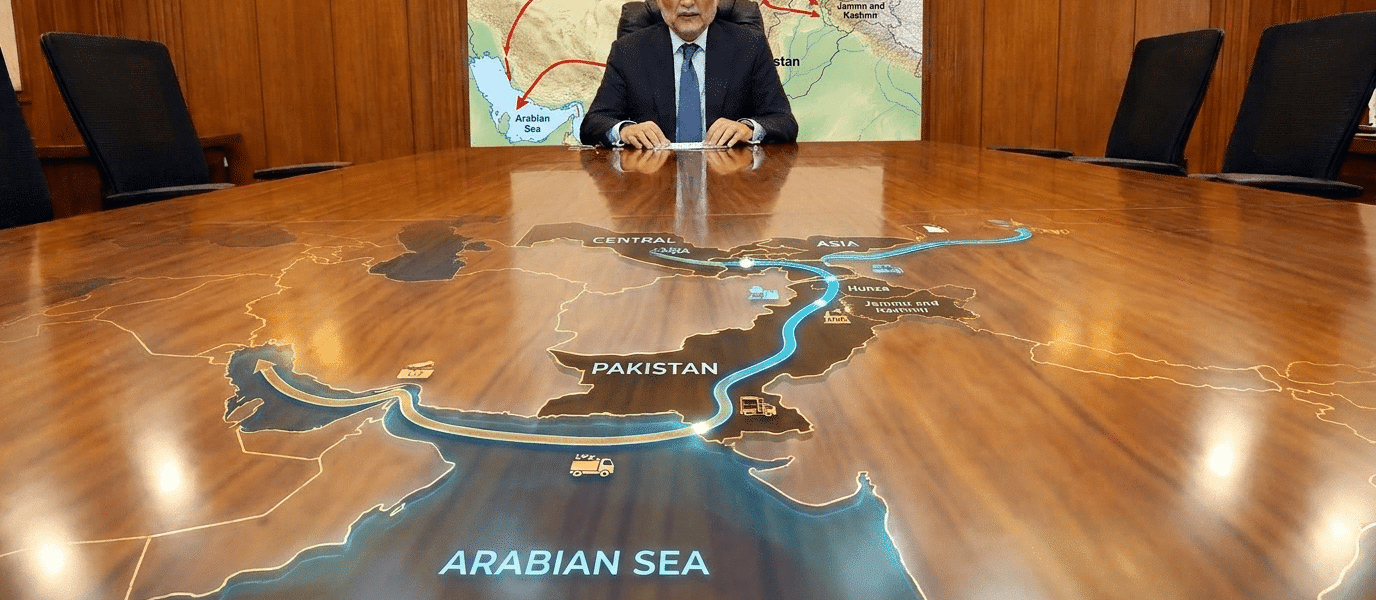
- The proposal aims to connect Central Asian trade with Pakistan’s Arabian Sea routes.
- The plan includes upgrading infrastructure and establishing logistics hubs.
Planning Minister Ahsan Iqbal has proposed a new trade plan to connect Central Asian trade with Pakistan’s Arabian Sea routes, aiming to boost economic activity in the region.
Speaking at the 25th Central Asia Regional Economic Cooperation (CAREC) Ministerial Conference in Ulaanbaatar, Mongolia, Iqbal highlighted the potential of CAREC Corridors 5 and 6 to link Central Asia with Pakistan’s Arabian Sea routes.
The minister emphasized that the focus should extend beyond merely allowing trucks to travel through the routes, advocating for a system that enables businesses to move goods reliably and profitably.
Iqbal outlined several key steps to complete the transport chain, including upgrading CAREC roads, modernizing border facilities at Torkham and Chaman, and improving rail freight capacity through the proposed ML-1 upgrade.
He proposed establishing logistics and production hubs along the corridors, which could include cold storage, packaging, warehousing, and light manufacturing facilities to facilitate the transformation of transit activity into exports and employment.
The minister also called for greater digital connectivity across the CAREC region, suggesting that Pakistan’s Single Window system could serve as a foundation for integrating digital trade processes with regional partners.
He stressed the importance of border procedures that include advance electronic information, compatible operating hours, coordinated processes, and fewer repeated checks.
Performance of the corridors would be measured through indicators such as border delays, delivery times, local employment, and the participation of small and medium-sized enterprises.
Iqbal also called for greater coordination among CAREC countries in the planning and development of cross-border projects, the use of common standards, and the alignment of investment and construction schedules.
The Asian Development Bank could play a crucial role in mobilizing financing, including private investment, to support these initiatives.