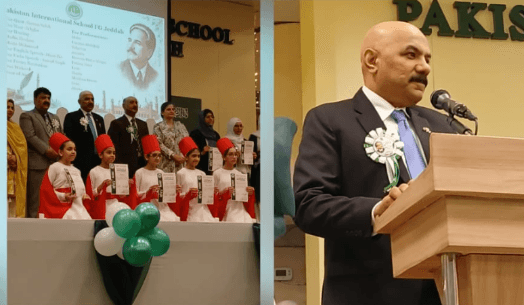
Speakers at an international conference on Allama Muhammad Iqbal on Wednesday emphasized the necessity of promoting his cultural and intellectual legacy to younger generations. The inaugural session of the two-day International National Iqbal Conference 2026 was held at Aiwan-e-Urdu, Islamabad, organized by the National Language Promotion Department (NLPD) in collaboration with Women University Mardan.
Federal Minister for National Heritage and Culture Division Aurangzeb Khan Khichi addressed the conference, stating that Iqbal’s intellectual legacy is an integral part of Pakistan’s cultural and national identity. He stressed that a country's development cannot be viewed separately from its culture and argued that economic prosperity and sustainable development require providing equal opportunities to youth and women. Khichi called for initiatives to bring Iqbal’s message to the youth through literary and academic activities, urging that conference recommendations be turned into practical measures with the support of the Higher Education Commission (HEC) rather than staying as academic discussions.
Vice Chancellor of Women University Mardan, Dr. Razia Sultana, noted in her welcome address that Iqbal had great expectations for young people, teaching them lessons of self-reliance and selfhood. She stated that while Iqbal’s vision of a separate homeland became Pakistan, his poetry continues to inspire Muslims toward purpose and intellectual growth. Dr. Sultana described Iqbal as a philosopher, economist, jurist, and thinker whose work introduced the true spirit of Islam and encouraged research while maintaining cultural identity.
Director General of NLPD, Professor Dr. Muhammad Saleem Mazhar, said the conference aimed to highlight Iqbal’s philosophy in an international context to create new opportunities for research. He stated that Iqbal’s message promotes intellectual independence and human awakening, serving as a source of guidance for the younger generation.
Ambassador of the Islamic Republic of Iran to Pakistan, Dr. Reza Amiri Moghaddam, highlighted the shared heritage between Pakistan and Iran, noting that Iqbal’s Persian poetry strengthened the literary and cultural ties between the two nations. He described Iqbal as a visionary whose ideas transcended geographical boundaries, noting that although Iqbal never visited Iran, he had a profound understanding of its culture.
Keynote speaker Barrister Waleed Iqbal, a former senator and grandson of Allama Iqbal, stated that the philosophy of Khudi encourages individuals to recognize their abilities and pursue practical struggles. He argued that Iqbal’s thought provides a foundation for collective progress and national sovereignty. Barrister Iqbal recommended reintroducing the poem "Lab Pe Aati Hai Dua" in schools to familiarize children with Iqbal's message early on, and stressed the need for Iqbal studies in universities to develop critical thinking.
Abdul Rauf Rafiqui, Director of Iqbal Academy Pakistan, Lahore, emphasized the importance of making Iqbal’s authentic texts and writings accessible to younger generations. Professor Dr. Muhammad Rafiq-ul-Islam, President of the Department of Iqbaliyat at Islamia University Bahawalpur, highlighted the historical role of literary journals in publishing special editions on Iqbal.
The proceedings were conducted by Kiran Qamar of Women University Mardan and Tariq Bin Azad of NLPD. A second session included a discussion among vice chancellors of eight universities, and Muhammad Nabeel Abbas presented a melodious rendition of Iqbal’s poetry.