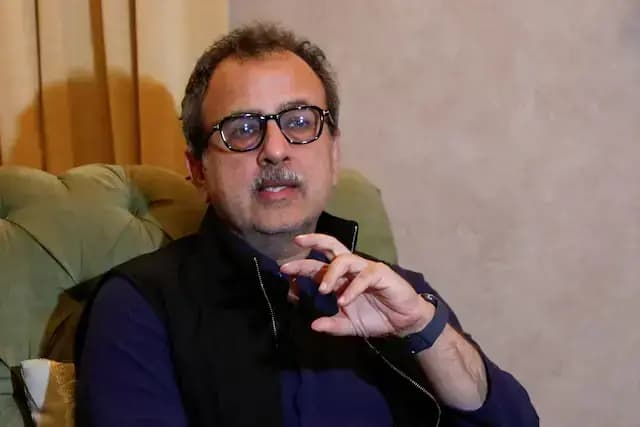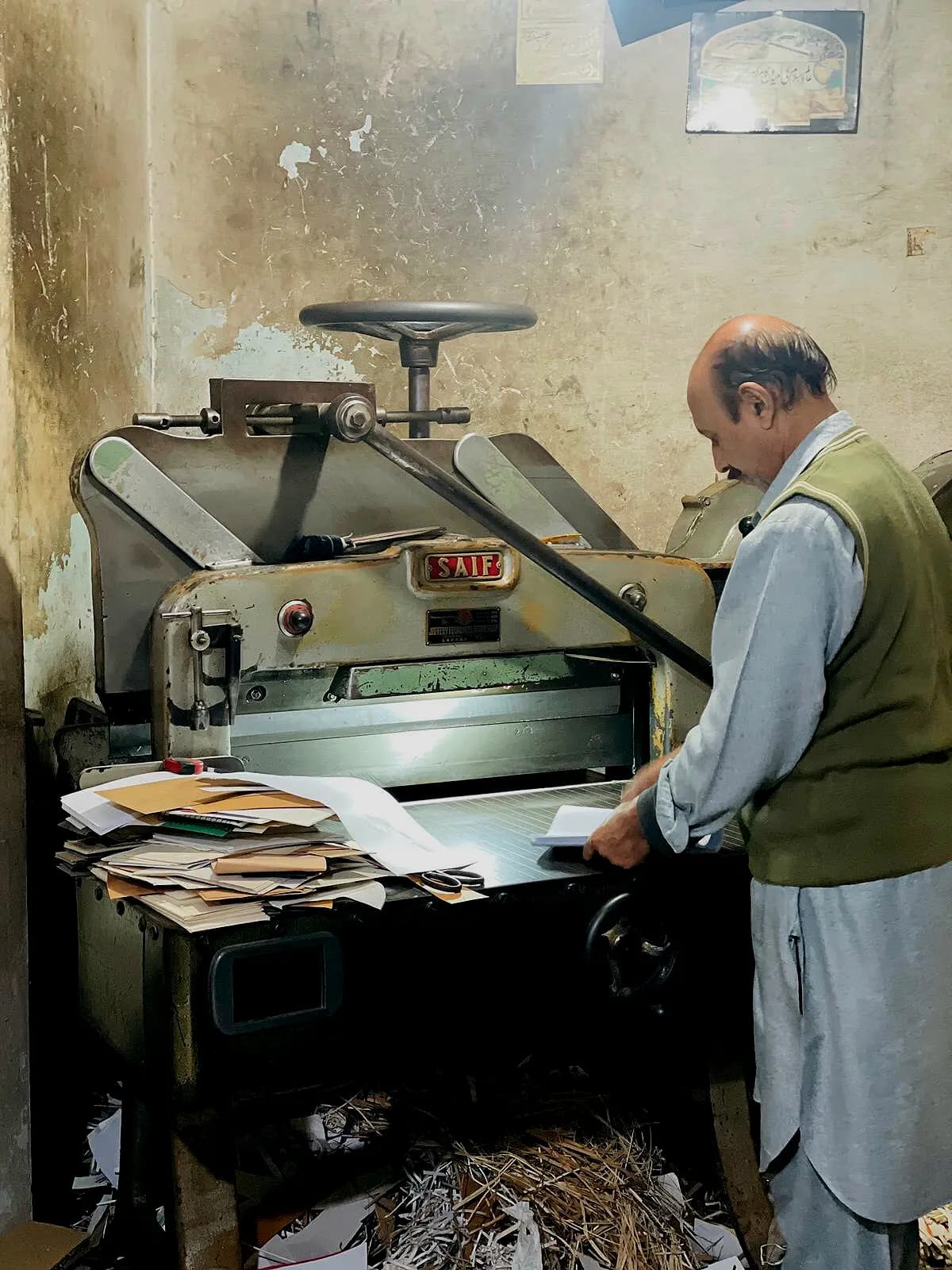
Saeed Ahmed, a bookbinder in his sixties, is struggling to sustain a traditional craft as mechanization and declining demand threaten the legacy of his family workshop. Located in a narrow alley in Lahore’s New Anarkali, the workshop continues to produce books by hand, a process involving folding, stitching signatures, and reinforcing spines.
Abdul Aziz established the workshop in 1972. Abdul Aziz, who began bookbinding at age 22 and worked at the government printing press for over three decades, stopped coming to the workshop approximately three years ago due to dementia. Ahmed, who also trained as a motor mechanic, chose to remain at the workshop to continue his father's work. "I had an attachment to the craft and wanted to continue what my father had started," Ahmed told Eos.
While the market for traditional handbound books has shrunk due to mass-produced notebooks and mechanized binding, Ahmed finds that restoration work remains a consistent source of income. He specializes in repairing damaged volumes, such as a 60-year-old Bible recently damaged by insects and age. Ahmed describes the state of some items he receives, stating, "Some [books] arrive with little left of them beyond fragments of their original bindings, their pages loosened, torn and barely held together by age."
Ahmed is currently uncertain if anyone will carry the craft forward. He did not consider teaching his daughters the trade and has been unable to find an apprentice willing to commit the necessary time, noting he is unsure if he could afford to pay one. Consequently, Ahmed is considering selling the workshop's machinery to continue restoration from home to save on rent.
As mechanization transforms production, slower, labor-intensive ways of making things are becoming harder to sustain. Because much of the knowledge Ahmed carries exists in his experience and intuition rather than written instructions, the craft faces the risk of disappearing within a generation if it cannot be made economically viable for the next practitioner.