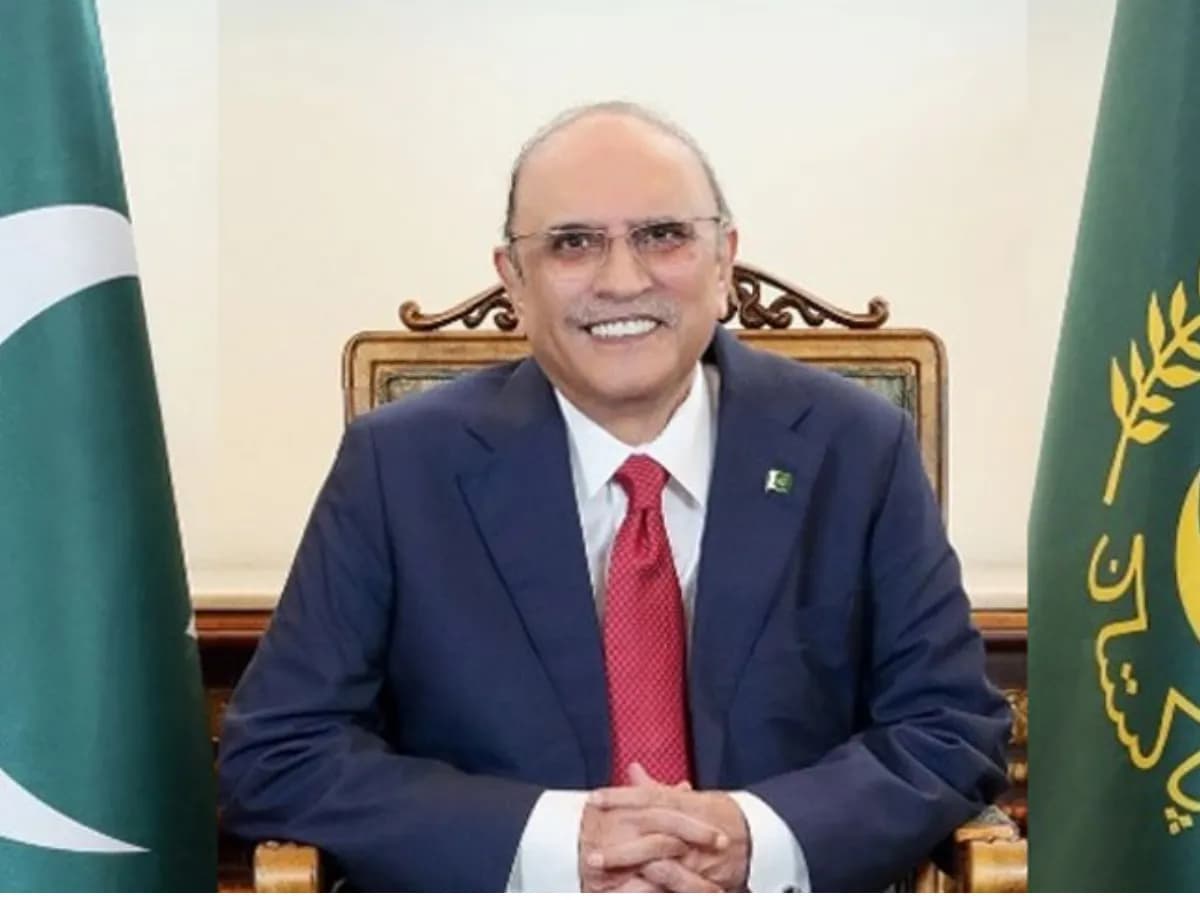
President Asif Ali Zardari has promulgated five ordinances that significantly alter the legislative and administrative framework of Khyber Pakhtunkhwa. The new laws strip provincial lawmakers of several key privileges, most notably the protection against "preventive detention."
The ordinances follow the imposition of an emergency in the province on October 11, which led to the establishment of an Area Representative and Development Council (ARDC). This council was created to oversee 12 districts facing what authorities described as serious security challenges, including the former tribal districts.
Four of the five ordinances were published in the Official Gazette on November 19. These include the Khyber Pakhtunkhwa Societies (Registration) (Amendment) Ordinance, 2026; the Khyber Pakhtunkhwa Special Initiative Ordinance, 2026 (specific districts); the Khyber Pakhtunkhwa Special Initiative Ordinance, 2026 (other districts); and the Khyber Pakhtunkhwa Provincial Assembly (Powers, Immunities and Privileges) Ordinance, 2026 (XI of 2026). The fifth is the Khyber Pakhtunkhwa Speaker and Deputy Speaker (Salaries, Allowances and Privileges) Ordinance, 2026.
The most significant changes involve the reduction of legal protections for members of the provincial legislature. Through the amendment ordinance, 21 of the 40 sections of the Khyber Pakhtunkhwa Provincial Assembly (Powers, Immunities and Privileges) Act, 2026, have been omitted. These deletions include provisions safeguarding lawmakers against "preventive detentions" and addressing offences relating to "breach" of the Assembly's privileges. The schedule listing offences involving violations of the privileges of the Assembly, its members and committees has also been removed.
According to police, Speaker Babar Saleem Swati and other lawmakers have remained in "preventive detention" since the emergency was imposed. Chief Minister Sohail Afridi, whose role as provincial chief executive was rendered non-functional following the imposition of governor's rule, has also been in "preventive detention" since that time. Khyber Pakhtunkhwa Governor Faisal Karim Kundi also stated last month that they were placed under house arrest.
The two special initiative ordinances establish separate executive committees to oversee development and public-funded activities. For the 12 designated districts, the committee will comprise a chairman, vice chairman and other members nominated by the prime minister. For the remaining districts, members will be nominated by the provincial governor.
The ordinances define a "special initiative" broadly as any work, development scheme, rehabilitation or reconstruction project, procurement of goods and human resources, consultancy or non-consultancy services, or any other activity involving public expenditure. The committees have been vested with extensive administrative and financial powers, including identifying initiatives requiring urgent or emergency intervention, scrutinising and approving proposals, and granting anticipatory approval for projects. They are also empowered to identify and recommend executing agencies, including military organisations and formations, for implementation.
The committees must meet at least once a month or whenever required, with decisions taken by a majority vote. The chairman holds a casting vote in the event of a tie and may co-opt technical experts for advice. These ordinances have an overriding effect over other applicable laws, including the Khyber Pakhtunkhwa Public Procurement Regulatory Authority Act, 2012, and the Khyber Pakhtunkhwa Public Private Partnership Act, 2020. Furthermore, no civil court shall have jurisdiction over any act performed, order passed or proceedings undertaken under the new framework.
Additionally, the Khyber Pakhtunkhwa Societies (Registration) (Amendment) Ordinance, 2026, introduces a new sub-section, 1-A, in Section 21 of the Societies Registration Act. This provision exempts madressahs registered, or eligible to be registered, with the Directorate General of Religious Education under the federal Ministry of Federal Education and Professional Training from the requirement of obtaining separate registration under the provincial Societies Registration Act.