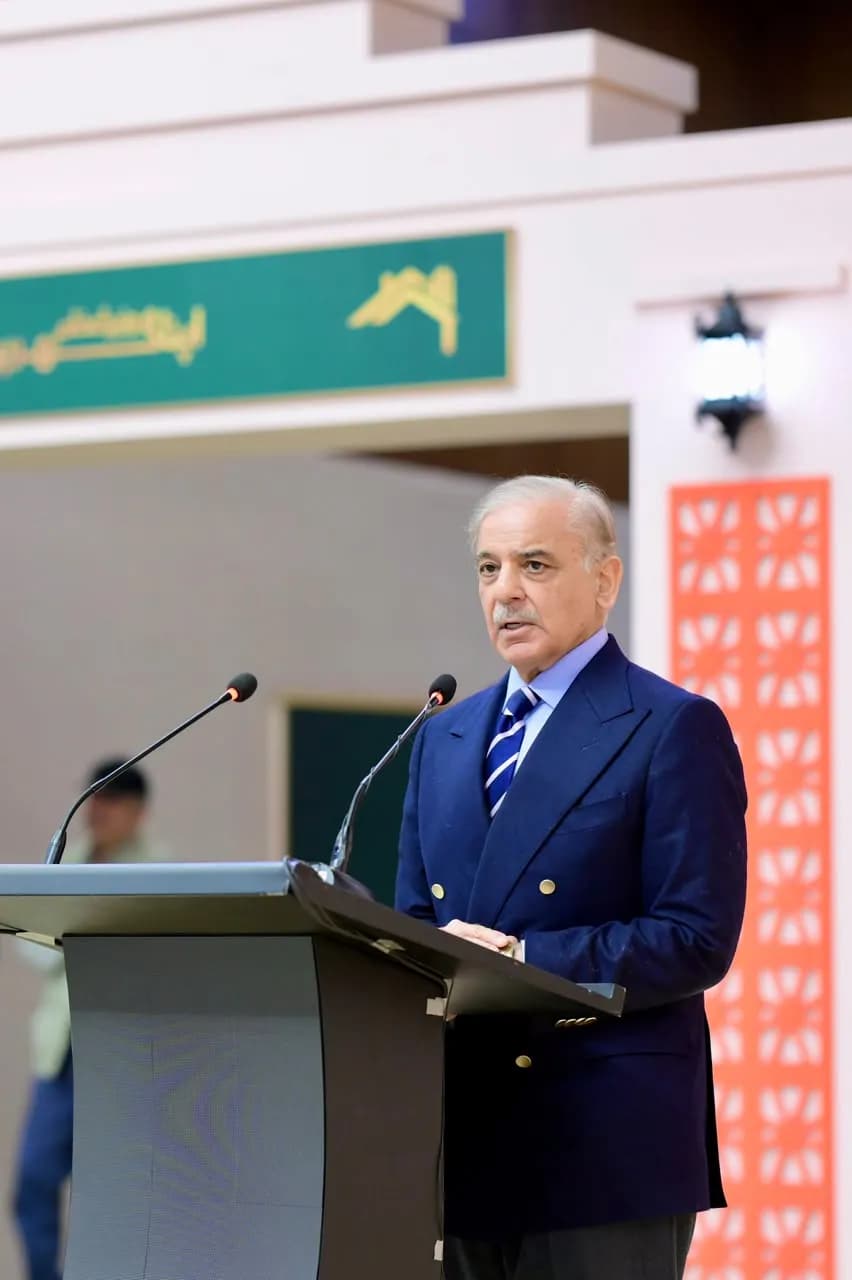
Prime Minister Muhammad Shehbaz Sharif declared on Monday that there is no limit on the number of homes the government will build for the poor, stating he intends to construct millions if necessary to ensure no deserving family is left without a roof. During a ceremony marking the milestone of over Rs100 billion in loans reaching citizens under the Apna Ghar Programme, the prime minister set an ambitious target of Rs1,000 billion in disbursements over the next six months.
The prime minister expressed deep concern that while some enjoy every comfort, many are deprived of shelter, education, healthcare, and dignified employment, stating this was not the Pakistan envisioned by Quaid-e-Azam Muhammad Ali Jinnah. He recalled a visit to a widow’s one-room rented home in Lahore early in his career as a member of the Punjab Assembly, which led to the creation of the Ashiana housing schemes in Punjab. He noted the woman, who stitched clothes to feed her children and care for a seriously ill daughter, represented the reality faced by millions of families.
Sharif stated that past housing schemes mostly served the elite, whereas the real need lies with labourers, widows, orphans, and low-income families across Pakistan, including Azad Jammu and Kashmir and Gilgit-Baltistan. He asserted that if the state cannot provide a roof to such families, it has no right to rule.
The Apna Ghar Programme was launched in April 2026. The prime minister reported that in about six and a half months, banks had disbursed Rs112 billion against loan sanctions of about Rs500 billion. While calling this a good start, he stated the journey ahead must be covered at “lightning speed.” He directed the finance minister, the State Bank of Pakistan (SBP) governor, the housing minister, and the banks to aim for the Rs1,000 billion disbursement target in the next six months, promising to remove hurdles and legal impediments without exposing banks to undue risk.
The prime minister noted that banks were initially reluctant to enter this segment due to comfortable returns on treasury bills and government deposits. He praised those who came forward, stating he was told the scheme was free of corruption and nepotism. He recalled a beneficiary from Peshawar stating that no one had asked him about his party affiliation, calling this a mark of transparency and merit. He told bankers that even a wrongful recommendation from the prime minister should be reported to him by phone, as the resources belong to the people who deserve them.
Announcing recognition for the top five high-performing banks, the prime minister said they would be given blue passports, with a notification to be issued the same day. He stated it would be for each bank’s owners or CEOs to decide who would hold them. He added that the recognition carries responsibility, as any delay in genuine loan approvals would now be attributed to them.
The prime minister stated that an unencumbered, clear title is the main requirement for a loan, and that other documentation should be handled by banks by helping applicants rather than turning them away. He described it as unacceptable that some banks claimed to be unaware of the scheme and urged them to set up dedicated cells. Responding to suggestions from the ABAD chairman, the prime minister welcomed a proposed tripartite coordination involving the Association of Builders and Developers (ABAD), the SBP governor, the builders, and the banks, and directed the finance minister to hold a meeting with the housing minister and housing secretary. “We want results,” he said, adding he was ready to support the effort if it truly helped build homes.
Finance Minister Senator Muhammad Aurangzeb provided a detailed rundown of the targets achieved so far under the programme. ABAD Chairman Hanif Kohari appreciated the prime minister for turning the housing initiative into a practical programme, stating it had created opportunities for the construction sector. Kohari, representing about 1,500 members nationwide, expressed confidence that the target of 500,000 homes would be met through continued cooperation.
The ceremony included experiences from beneficiaries including Musarrat Qamar (Azad Jammu and Kashmir), Dr Asad Ali (Quetta), Anam Akhtar (Rawalpindi), Jameela Bibi (Rahim Yar Khan), and the Karachi couple Babar Zaib and Tayyaba Qazi, who said the financing helped them complete or buy homes after years in rented accommodation.
Awards were presented to the following top-performing banks: Deputy CEO United Bank Limited Abdul Aleem Qureshi, President HBL Muhammad Nassir Salim, President Bank Alfalah Atif Bajwa, Acting CEO/COO Retail Meezan Bank Ziaul Hasan, and Chief Business Officer Mobilink Microfinance Bank Ataur Rehman.