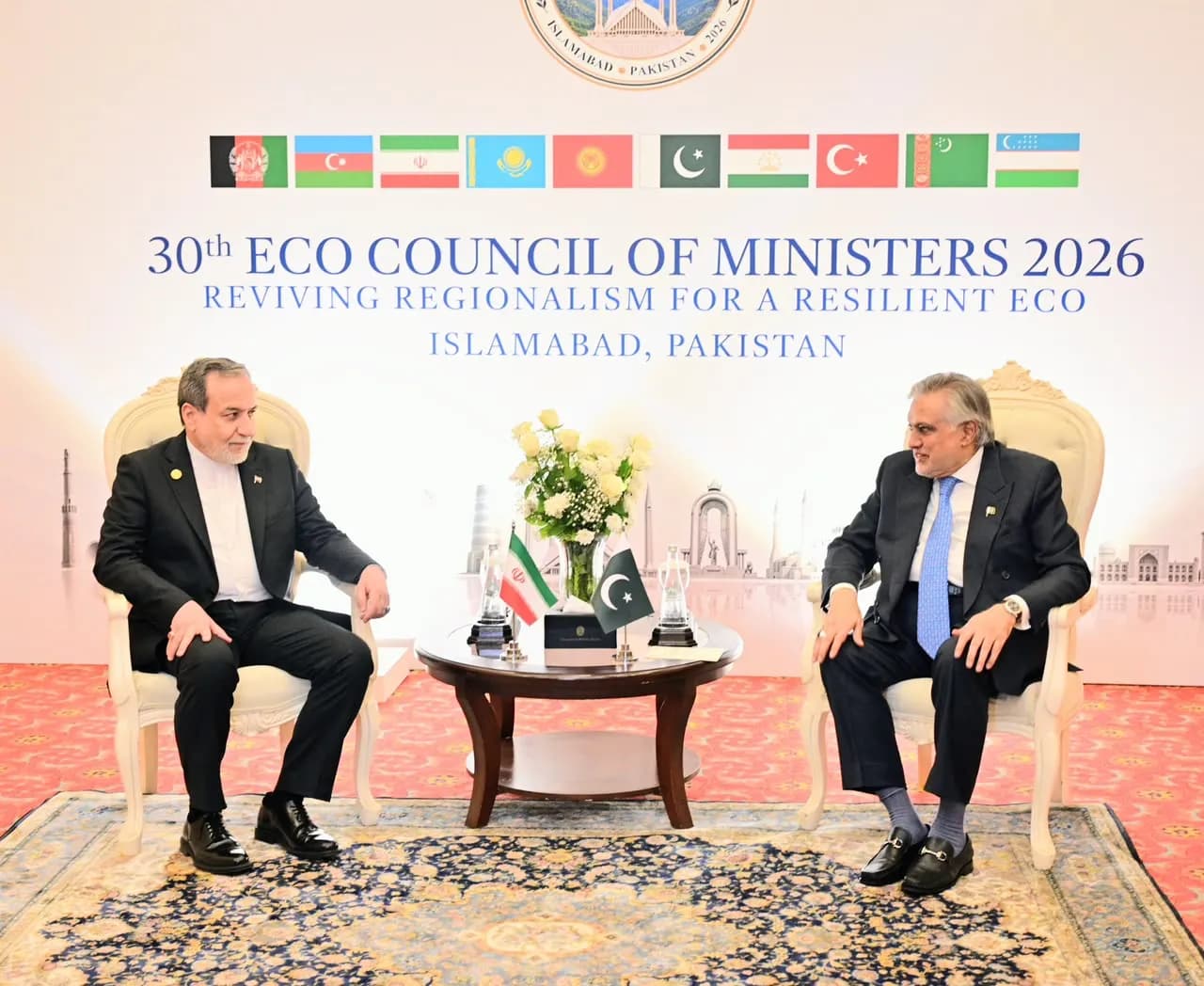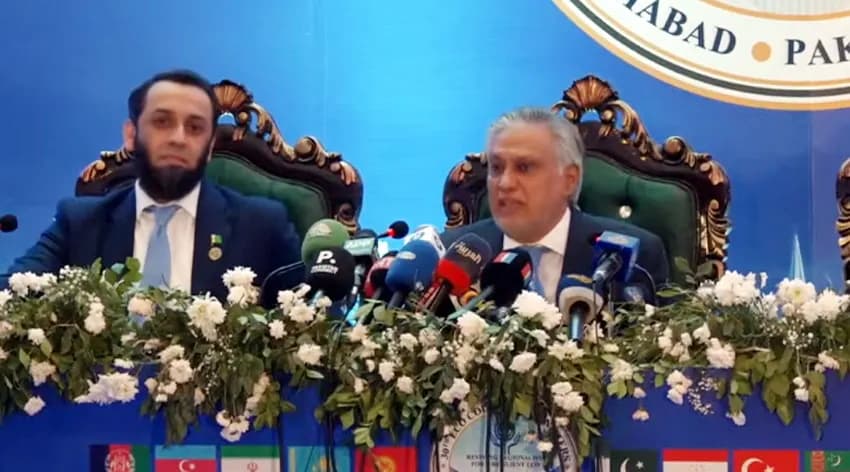
Deputy Prime Minister and Foreign Minister Senator Muhammad Ishaq Dar stated on Monday that Pakistan is committed to making its chairmanship of the Economic Cooperation Organization (ECO) a period of tangible progress and meaningful outcomes. Speaking at a press conference in Islamabad following the 30th ECO Council of Ministers meeting, Dar said the organization's objectives are to bring progress, prosperity, peace, and stability to the region.
Dar outlined key priority areas for Pakistan's two-year chairmanship, which runs until December 2027. These include expanding market access, strengthening regional value chains, promoting investment, and encouraging private sector participation, specifically for small and medium-sized enterprises. He stated that the ECO will work to deepen connectivity between Central Asia, South Asia, and Pakistan’s Arabian Sea port by using predictable transit arrangements and harmonized customs procedures.
The Foreign Minister noted that the organization will attempt to implement the negotiation strategy and roadmap for the ECO Trade Agreement (ECOTA), which was approved by ECO Trade Ministers in November of last year to modernize trade mechanisms. Additionally, Dar said the ECO will strive for regional cooperation regarding water management, energy, climate resilience infrastructure, and disaster preparedness. Other goals include research collaboration, innovation, vocational training, and youth employment.
Dar emphasized that progress on these priorities requires a stable regional environment. In his country statement, he argued that regional connectivity relies on more than just physical routes, stating that regional stability and respect for international law are essential. He called for the peaceful resolution of disputes through diplomacy in accordance with the United Nations charter and reiterated Pakistan's support for de-escalation.
Recalling Pakistan's presidency of the Security Council last year, Dar noted that Pakistan championed the theme of multilateral and pacific settlement of disputes, leading to a resolution passed by consensus by five permanent and 10 non-permanent members in the UN Security Council. "Within no time there was fight between Cambodia and Thailand which triggered a debate in the United Nations and this resolution was quoted during the session on Thailand and Cambodia war," Dar said.
Regarding the ECO's future, Dar said, "We will work together with our ECO partners to translate the strategic goal of economic cooperation into an action plan with clear responsibility, realistic timelines and measurable indicators." He added, "Pakistan believes that the strength of ECO lies in the collective commitment to deliver tangible benefit for our people."
During the meeting, Dar held bilateral talks with the Secretary General of the ECO, the Secretary General of the OIC, the Secretary General of CICA, and the Foreign Ministers of Iran and Tajikistan, as well as the Deputy Foreign Ministers of Turkiye and the Kyrgyz Republic.
Addressing Afghanistan, Dar stated that the country's membership in the ECO is suspended and clarified that Pakistan does not recognize the interim government there. He said Pakistan is ready to work with Afghanistan on all issues provided the territory is not used for terrorism against neighboring countries. Dar noted that because of terrorism, Pakistani soldiers have been martyred, but Pakistan allowed the UN to transport 1,000 containers of humanitarian goods to Afghanistan to meet humanitarian needs.
Dar also mentioned that Pakistan continues to raise the non-implementation of UN resolutions on Jammu and Kashmir at various forums. He underscored the necessity of a regional security architecture and stated that the agreement between Pakistan, Turkiye, and Saudi Arabia is intended for self-defence.