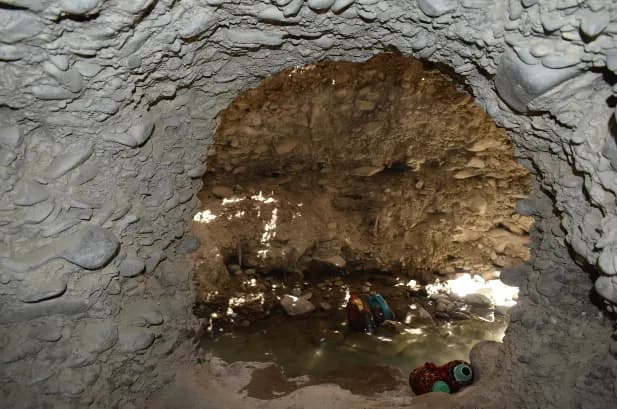
Muhammad Ashraf, Country Representative of the International Water Management Institute (IWMI) in Pakistan, stated that the future of Balochistan is closely linked to the rehabilitation, management, operation and maintenance of its traditional Karez water system. Speaking to APP on November 22, Ashraf warned that relying on tubewells without adequate groundwater recharge would ultimately deplete the province's vital water resources.
Ashraf reported that groundwater levels in many areas have already fallen to between 1,000 and 1,300 feet, noting that deeper extraction is resulting in increasingly poor water quality. He argued that water security in Balochistan lies in nature-based solutions, specifically rainwater harvesting, groundwater recharge, and the revitalization of the Karez system. Ashraf stated, "It does not merely bring water. It revives an entire civilisation."
The IWMI representative highlighted that Karez systems are community-built, gravity-fed, and free from evaporation losses, which makes them inherently sustainable if properly maintained. To illustrate the impact of rehabilitation, Ashraf shared that the discharge of a previously dry Karez had increased threefold within two years of being restored.
The significance of the system was a topic of discussion during Pakistan Water Week 2026, a five-day conference. A dedicated session titled “Vanishing Karez System of Balochistan: How Can It Be Managed Sustainably?” gathered water scientists, legal and governance specialists, and heritage experts. Speakers at the event expressed concern that while Balochistan once had more than 5,000 Karez systems, only 17 remain fully functional. They called for urgent, coordinated efforts to protect the indigenous irrigation network and the communities that rely on it.
Dr. Christina, representing UNESCO, confirmed that the Karez systems have been included on UNESCO’s World Heritage Tentative List. This milestone was achieved through collaboration between the Government of Balochistan, UNESCO Pakistan, and the Pakistan Council of Research in Water Resources (PCRWR). Christina noted that full inscription on the World Heritage List would require a comprehensive nomination dossier prepared under the leadership of the Government of Balochistan. She stated, "World Heritage status is not just an honour. It is a shield. International recognition can provide the legal and financial protection these systems urgently need."