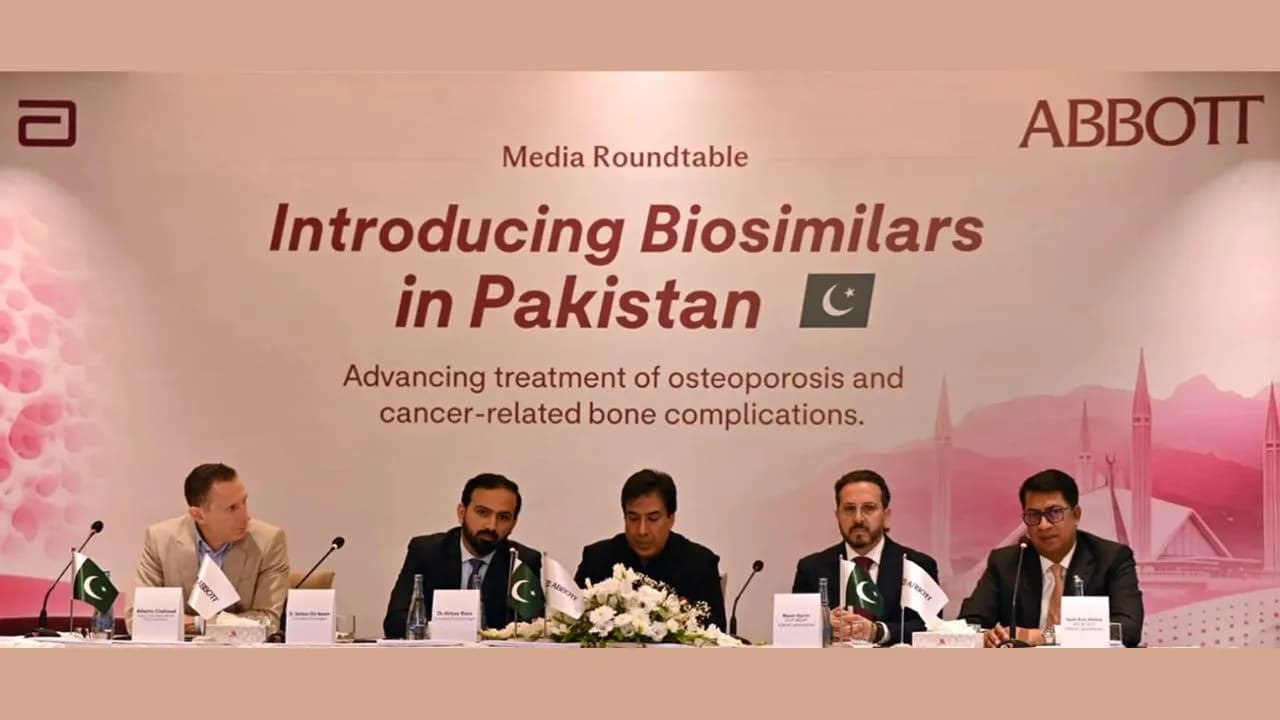
Abbott has received product registration from the Drug Regulatory Authority of Pakistan (DRAP) for 60 mg and 120 mg denosumab biosimilars. These medicines are for treating osteoporosis and cancer induced skeletal-related events.
Mazen Bachir, Division Vice President of Abbott’s medicines business in the Middle East, Africa and Pakistan, said, "For people living with osteoporosis, access to the 60 mg denosumab biosimilar can be very meaningful. The same applies to the 120 mg denosumab biosimilar for people living with cancer induced skeletal-related events." Bachir added that by making advanced and high-quality therapies more accessible, Abbott will continue to positively impact the lives of patients and contribute to strengthening healthcare outcomes across Pakistan.
The Journal of the Pakistan Medical Association estimates that nearly 10 million people in Pakistan have osteoporosis, with women accounting for approximately 7.2 million cases. A study in Islamabad and Rawalpindi reported osteoporosis in 56% of postmenopausal women assessed using dual-energy X-ray absorptiometry (DEXA).
Fragility fractures, such as hip and vertebral fractures, contribute to disability, healthcare costs, loss of independence, and mortality in older adults. Osteoporosis is a leading cause of mortality among the elderly and particularly affects postmenopausal women.
A Phase III SIMBA study published in Pharmaceutics in 2026 confirmed that the biosimilar MB09 marketed by Abbott in Pakistan demonstrated clinical similarity to the reference biologic. The study found comparable efficacy and safety, offering equivalent protection against bone mass loss in postmenopausal women.
Abbott is providing denosumab as part of a strategy to expand access to high-quality medicines in oncology, immunology and women’s health through partnerships with biotechnology companies. In Pakistan, this includes introducing biosimilars in oncology to address unmet healthcare needs.
Professor Syed Abbas Raza, Endocrinologist and Past President of International Society of Endocrinology, said, "Maintaining bone health is essential to preserving independence and quality of life." Raza added, "The introduction of quality therapies gives more treatment options to those who need them most."