Key Takeaways
- Pakistan opposes adding new permanent members to the UN Security Council.
- Ambassador Asim Iftikhar Ahmad advocates for more elected, non-permanent members.
- Pakistan emphasizes the need for a more democratic and representative Security Council.
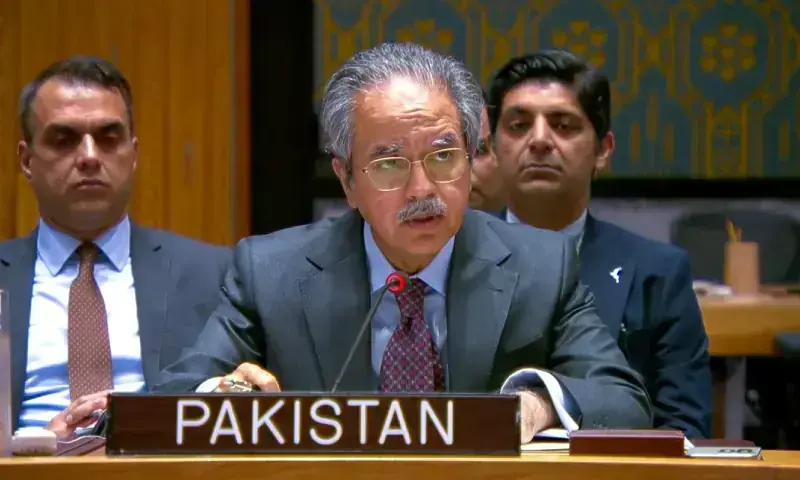
Pakistan has expressed its opposition to the addition of new permanent members to the UN Security Council, instead favoring an increase in the number of elected, non-permanent members. This stance was articulated by Ambassador Asim Iftikhar Ahmad, who is set to take charge as the country’s new foreign secretary.
Speaking to Dawn, Ahmad highlighted the belief among a wide majority of member states that the Security Council needs to be reformed to become more democratic, representative, and accountable. He argued that adding new permanent members would only exacerbate existing issues.
Ahmad noted that Pakistan, along with members of the Uniting for Consensus group and other like-minded countries, has been advocating for a reformed Council with more elected members, including medium-term seats based on periodic elections and rotation. He emphasized that Pakistan and other countries are eminently qualified to contribute to the Security Council and the maintenance of international peace and security.
The Pakistan diplomat also highlighted the country’s 2025-26 term on the Security Council, which was its eighth tenure. For Ahmad personally, it was his third consecutive Council assignment, having previously served in 2003-04 and 2012-13. He expressed great honor in representing Pakistan at the United Nations, including at the Security Council.
During Pakistan’s term, the country identified conflict prevention and peaceful settlement of disputes, peacekeeping, counterterrorism, and cooperation with regional organizations as key priorities. Ahmad said, 'We were able to achieve a lot in all of those domains.'
The term unfolded against a backdrop of deep geopolitical tensions, including a sharp deterioration in relations between India and Pakistan. This culminated in a four-day military confrontation in May 2025, bringing the two nuclear-armed neighbours dangerously close to a wider conflict. Despite this, Ahmad pointed to Security Council Resolution 2788, adopted during Pakistan’s presidency of the Council in July 2025, as one of the major achievements of the country’s term. The resolution placed renewed emphasis on the mechanisms provided by the UN Charter for the peaceful settlement of international disputes.
Ahmad concluded by emphasizing the importance of diplomacy in preventing conflicts from escalating and the need for a more democratic and representative Security Council. He stated, 'Member states should be ready to fulfill that responsibility without permanence and privilege.'
Developments in recent years in the peace and security landscape and within the Security Council, as well as increased criticism of the role of the permanent members, have further reinforced the belief of a wide majority of member states that we need a more democratic, representative and accountable Security Council.
Ambassador Asim Iftikhar Ahmad, Pakistan’s UN envoy and new foreign secretary
Adding any new individual permanent members would only aggravate the problem. In simple words, the problem cannot be the solution.
Ambassador Asim Iftikhar Ahmad, Pakistan’s UN envoy and new foreign secretary