Key Takeaways
- Federal Minister Ahsan Iqbal proposed an SCO Digital Governance and AI Capacity-Building Network.
- The initiative aims to connect governments, universities, and private-sector innovators across SCO member states.
- Pakistan outlined five key initiatives, including an SCO Digital Governance Academy and a Digital Public Infrastructure Exchange.
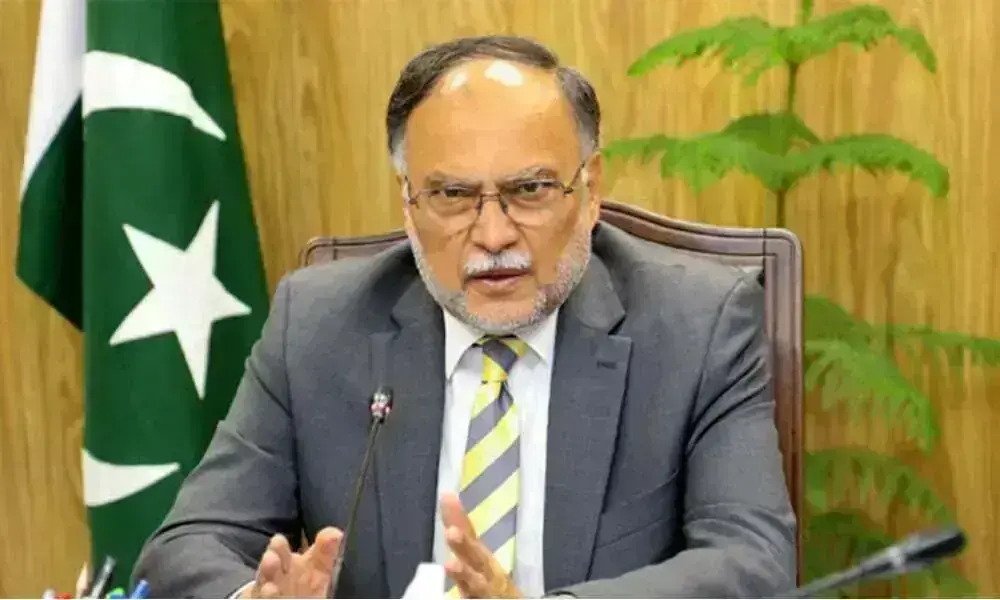
Federal Minister for Planning, Development and Special Initiatives Ahsan Iqbal has proposed the establishment of an SCO Digital Governance and AI Capacity-Building Network, aimed at fostering digital cooperation among member states.
Delivering the keynote address at the Thematic Forum on Digital Governance and Capacity Building during the 2026 Shanghai Cooperation Organization (SCO) Digital Economy Forum in Urumqi, Iqbal highlighted the need for digital governance, which redesigns government systems around citizens, data, interoperability, and measurable outcomes.
The proposed network includes an SCO Digital Governance Academy to train officials in digital transformation, AI governance, cybersecurity, and citizen-centric service delivery.
A second initiative, the SCO Digital Public Infrastructure Exchange, aims to facilitate the sharing of digital identity, instant payments, e-procurement, taxation, health, education, and business registration solutions.
The third initiative, an SCO Fellowship for Digital Government and AI, will promote exchanges and placements among young civil servants, researchers, and technologists across SCO member states.
Additionally, a Responsible AI and Data Governance Forum will focus on privacy, cybersecurity, ethical AI, and cross-border data flows.
The fifth proposal is an SCO Digital Inclusion and Innovation Facility, which will support capacity building, regulatory assistance, and pilot projects for underserved communities.
Iqbal emphasized the importance of measurable outcomes, stating that cooperation should move from declarations to demonstrable results, with specific targets for training officials, developing interoperable systems, and launching joint projects.
Describing Pakistan as a natural bridge connecting China, Central Asia, South Asia, the Middle East, and the Arabian Sea, Iqbal said CPEC 2.0 would complement physical connectivity with digital connectivity, enabling the transport of knowledge, services, finance, and opportunity through trusted digital corridors.