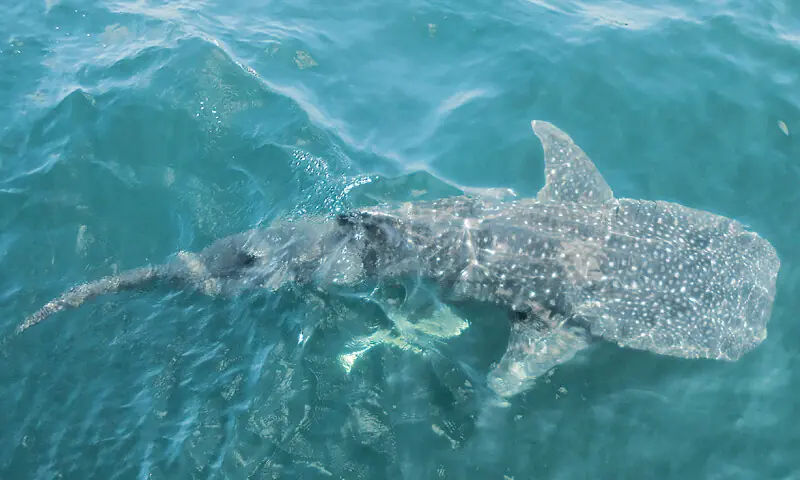
Key Takeaways
- Minister Muhammad Junaid Anwar Chaudhry announced Pakistan's first 10-year national action plan for shark conservation.
- The plan aims to restore declining shark populations and protect critical marine habitats.
- Implementation will be carried out in three phases with an estimated $3.8 million to $5 million in funding.
Minister for Maritime Affairs Muhammad Junaid Anwar Chaudhry announced Pakistan's first 10-year national action plan for shark conservation on Tuesday. The plan, titled the National Plan of Action for the Conservation and Management of Sharks (NPOA), is designed to address the decline in shark populations and illegal finning and bycatch in Pakistani waters.
The NPOA will be implemented in three phases and is expected to receive funding of between $3.8 million and $5 million during its first five years. Chaudhry stated that the plan would be overseen by a multi-stakeholder National Advisory Committee, ensuring a collaborative approach to shark conservation.
Key measures proposed under the plan include mandatory fins-naturally-attached policies, species-specific protections, the establishment of shark sanctuaries, and mangrove restoration. Additionally, the plan aims to reduce shark deaths as bycatch across various fisheries and improve the livelihoods of coastal fishing communities through targeted support.
Chaudhry emphasized the importance of strengthening fisheries management and enforcement, as well as improving data collection and scientific research on shark populations. The plan also seeks to promote sustainable shark fisheries and encourage greater international cooperation, including through Pakistan's participation in the Indian Ocean Tuna Commission.
The implementation of the NPOA will be assessed annually using performance indicators such as landing-site monitoring coverage, completion of stock assessments, use of vessel monitoring systems, and reductions in bycatch mortality. Formal reviews will be conducted every three years to ensure the plan's effectiveness.
The plan covers all chondrichthyan species found in Pakistani waters, including sharks, rays, skates, and chimaeras. Chaudhry noted that although the primary emphasis is on sharks, the management frameworks, data collection systems, and enforcement mechanisms established through the NPOA will also benefit other elasmobranch species.
According to a 2021 assessment by the World Wide Fund for Nature-Pakistan (WWF-P), shark landings in Pakistan have decreased by over 85 per cent in five decades. WWF-P had previously suggested a ban on the catch of endangered shark species and the import and export of shark fins.
Chaudhry highlighted that the preparation of the plan meets Pakistan's responsibilities as a shark-fishing nation under international fisheries law. He added that the FAO's international shark action plan encourages countries to develop national conservation and management plans, minimize waste, and promote sustainable fishing practices.