Key Takeaways
- Oil companies argue federal law preempts state and local climate change lawsuits.
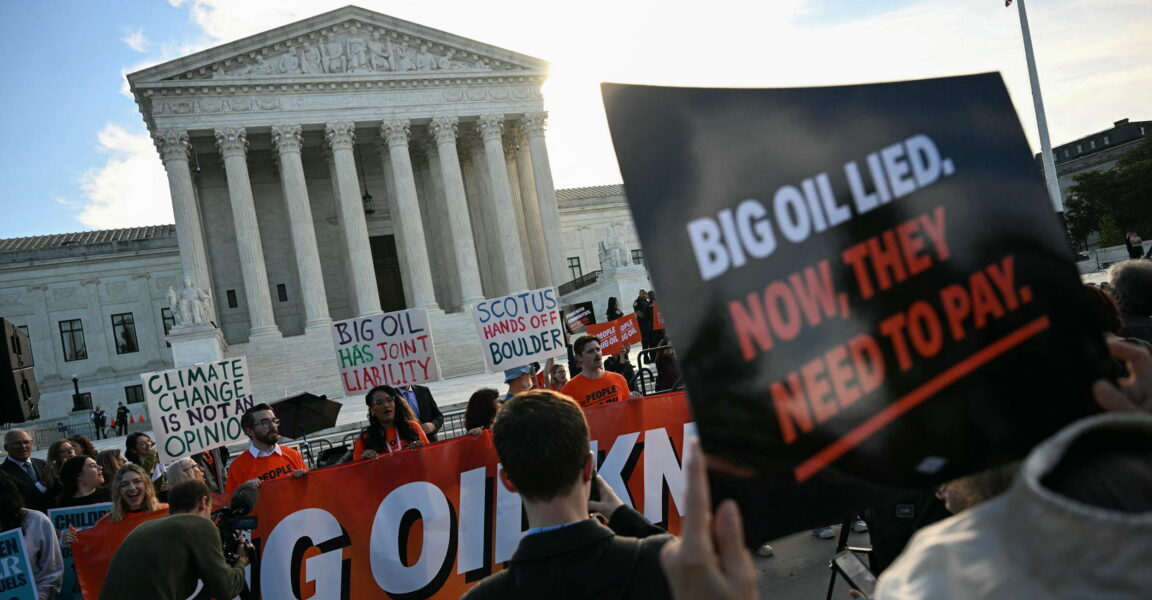
- Supreme Court heard arguments on Monday regarding the fate of over two dozen lawsuits.
- Claims seek billions in damages for climate-related extreme weather costs.
Oil companies, including ExxonMobil and Suncor Energy, are seeking Supreme Court intervention to prevent climate change lawsuits from proceeding to trial. The case, brought in 2018 by the city and county of Boulder against these companies, is part of a larger group of lawsuits accusing the industry of misleading the public about climate change impacts.
During the hearing on Monday, the Supreme Court did not delve into the merits of the claims but focused on technical legal issues. The oil companies are arguing that federal law preempts state and local governments from bringing such lawsuits, aiming to prevent them from moving forward in state courts.
The lawsuits seek potentially billions of dollars in damages to cover the costs associated with climate-related extreme weather events. These events, such as hurricanes, floods, and heatwaves, have been increasingly linked to climate change, leading to significant financial burdens on affected communities.
While the Boulder case and similar lawsuits have survived multiple appeals in state and federal courts, the oil companies are now seeking a decisive ruling from the Supreme Court. This could have far-reaching implications for future climate change litigation, potentially setting a precedent for the entire legal landscape.
The hearing was part of a broader legal battle that has been ongoing for years. The oil companies have been facing increasing pressure from environmental groups and affected communities, who argue that the industry has known about the risks of climate change for decades but failed to act.
Legal experts suggest that the Supreme Court's decision could significantly impact the future of climate change litigation. If the court rules in favor of the oil companies, it could effectively shut down a large number of ongoing and potential lawsuits, limiting the ability of local governments to seek justice for the damages caused by climate-related events.
The case highlights the complex interplay between environmental law, corporate responsibility, and public health. As the world grapples with the increasing frequency and severity of climate-related disasters, the legal battles over who should bear the costs are becoming more contentious.
The outcome of this Supreme Court hearing could have far-reaching consequences for both the oil industry and the broader fight against climate change. It remains to be seen how the justices will rule, but the implications for future legal actions are significant.