Key Takeaways
- LPG market stakeholders urge government to shift from monthly to daily pricing.
- Closure of Rahimdad-250 border post exacerbates supply issues and price hikes.
- Stakeholders claim current policy no longer reflects market realities.
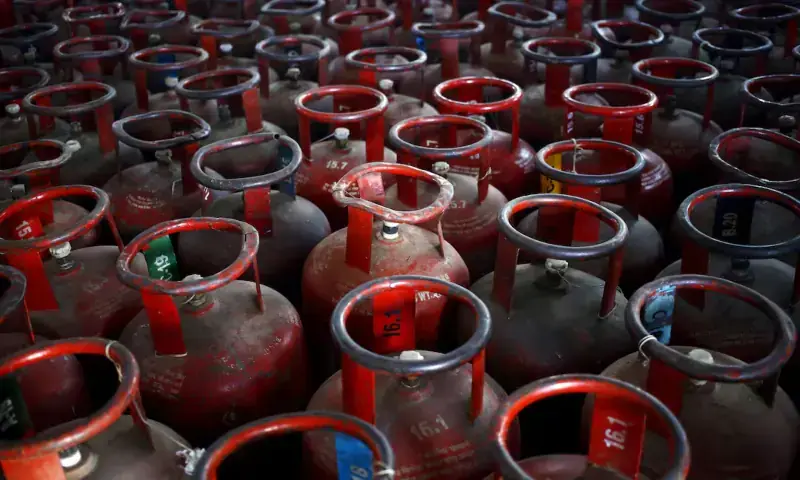
Liquefied petroleum gas (LPG) market stakeholders have called for daily pricing to address soaring rates, urging the government to align LPG pricing with petroleum products, according to a statement issued on Sunday.
The demand comes as the Rahimdad-250 border post remains closed, disrupting supplies and leading to price hikes, particularly in remote and hilly areas, where the risk of hoarding and blackmarketing is heightened.
Mohammad Ali Haider, vice chairman of the LPG Marketing Association, representing over 200 companies, stated that prices had risen by Rs100 per kilogram over the weekend, and could climb further without immediate intervention.
Haider explained that no imports were currently arriving at Saudi CP-based prices, with Iranian auctioned LPG previously reaching the border at $100-150 per tonne below Saudi CP. War-related insurance and freight premiums have since pushed costs to around $300 per tonne above CP, making Ogra’s benchmark increasingly unrealistic.
Pakistan consumes nearly two million tonnes of LPG annually, of which 30 per cent is produced domestically and 70 per cent imported. Of the 1.2 million tonnes imported, around 250,000 tonnes arrive through Port Qasim and nearly one million tonnes through Iranian routes, including Taftan, Mand, and Rahimdad-250.
The Ministry of Commerce’s October 16 memorandums withdrawing electronic import form (EIF) exemptions for Iranian imports and shipments to Central Asian Republics (CARs) and Azerbaijan via Iran have further disrupted supplies, with more than 4,500 tonnes of LPG reportedly stranded on the Iranian side.
Haider alleged that manipulated freight arrangements, questionable import declarations, and the absence of digital tracking of tankers, transporters, and distributors facilitated profiteering and tax evasion. He also criticised a petroleum division directive requiring SOEs to auction LPG against signature bonuses, arguing that the mechanism favoured cash-rich companies.
Petroleum Minister Ali Pervaiz Malik and ministry spokesman Zafar Abbas did not respond to written queries regarding the current LPG policy and its impact on market stability.