Key Takeaways
- India defended its satellite internet approval process as fair and non-discriminatory.
- Billionaire Elon Musk accused unnamed 'oligarchs' of blocking Starlink's launch in India.
- Starlink has faced a four-year wait for final clearances, amid security concerns.
India has defended its satellite internet approval process as fair and non-discriminatory, responding to accusations made by billionaire Elon Musk. Musk accused unnamed 'oligarchs' of blocking Starlink's launch in the South Asian nation, stating that these individuals were 'maintaining a monopolistic chokehold on the Indian people.'
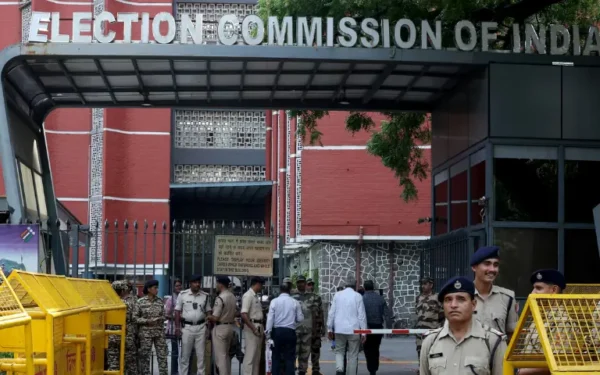
India’s telecommunications ministry responded by stating that three entities were at a similar regulatory stage, with security assessments ongoing for each. The ministry did not name the companies or Musk, emphasizing that the framework and its application were not unfair or discriminatory.
The approval process for satellite internet ventures in India has been a long-standing issue. Both Reliance Jio, led by billionaire Mukesh Ambani, and Bharti Airtel, headed by Sunil Mittal, have secured early approvals for their satellite internet projects. However, Starlink has faced a four-year wait, primarily due to scrutiny over security requirements and access to spectrum.
The timing of Musk's comments adds a diplomatic layer to the issue. The US has been pushing for Starlink's market access as a goodwill gesture in trade talks with tariff-hit countries, and New Delhi and Washington have struggled to finalize a trade deal since February.
Security concerns have also been a factor in the approval process. Indian authorities have recovered Starlink devices in two separate operations in late 2024: a drug seizure by police in the Andaman and Nicobar Islands and an army search in Manipur state. Musk later stated that Starlink's satellite beams were 'turned off over India' and 'never on in the first place.'
Despite the delays and controversies, India offers Starlink access to a satellite broadband market that Deloitte has forecast to be worth $1.9 billion by 2030. The approval process remains a critical issue in the ongoing trade and diplomatic relations between India and the US.
The clash between Musk and Indian telecom giants is not new. The two parties had previously been at odds over spectrum allocation before reaching a deal in 2025 to distribute Starlink devices in India. However, the recent accusations have reignited tensions and raised questions about the fairness of the approval process.