Key Takeaways
- The Islamabad High Court (IHC) reserved its verdict on a plea challenging President Asif Ali Zardari’s delay in approving judicial appointments.
- Advocate Luqman Zafar Chaudhary filed the petition, urging the court to direct the president to approve the summary for 19 additional judges and confirm five judges.
- The Judicial Commission of Pakistan (JCP) had recommended these appointments during its meetings on July 20 and 21.
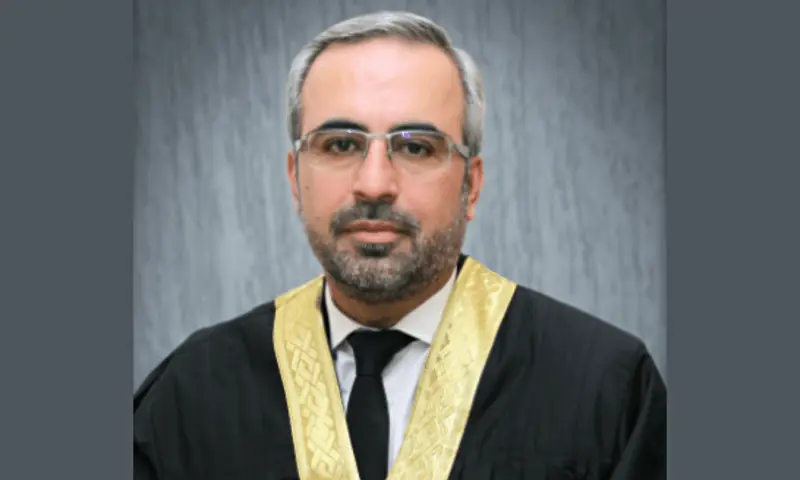
The Islamabad High Court (IHC) has reserved its verdict on a petition challenging the delay by President Asif Ali Zardari in approving judicial appointments. The case was heard on Thursday, with Justice Arbab Muhammad Tahir presiding over the proceedings.
Advocate Luqman Zafar Chaudhary, through his counsel Zahid Asif Chaudhry, filed the petition, requesting the court to direct the president to approve a summary for 19 additional judges and confirm five judges to various high courts. The appointments were recommended by the Judicial Commission of Pakistan (JCP) during its meetings on July 20 and 21.
The counsel argued that according to available information, the government had started issuing notifications regarding these appointments, despite the summary not being approved by the president even after 15 days had passed. He requested the court to seek details about the status of the summary.
Justice Tahir questioned if a constitutional petition could be maintained against the president and asked for precedents where writs were issued against him. The court also observed that the judgements cited by the petitioner did not support the proposition advanced by his counsel for issuing directives to the president under Article 48 of the Constitution.
The lawyer argued that once the JCP nominated judges, the summary was sent to the president through the prime minister, and the president had no discretion beyond granting approval. If the approval was withheld, the competent authority should proceed with issuing the notification. However, Justice Tahir continued to question the legal basis for issuing a writ against the president.
The counsel reiterated that the law ministry was the competent authority responsible for issuing appointment notifications and requested the court to seek responses from the federation, the Prime Minister’s Office, and the law ministry regarding the status of the summary. He further stated that reports suggested the government might issue the notifications within the next 48 hours.
During the hearing, Justice Tahir declined the request to issue notices at this stage.
The petitioner’s counsel told the court that according to the available information, the government had started issuing notifications regarding the appointments. He also requested the court to seek details about the status of the summary.
Zahid Asif Chaudhry, Counsel for Advocate Luqman Zafar Chaudhary
Justice Tahir, however, continued to question the legal basis for issuing a writ against the president and asked the counsel to identify the competent authority responsible for issuing appointment notifications.
Justice Arbab Muhammad Tahir, Justice of the Islamabad High Court