Key Takeaways
- Islamabad High Court (IHC) directs Pakistan Medical and Dental Council (PMDC) to examine doctors’ working hours.
- CPSP cites international limits, including 48 hours per week in Europe and 80 hours in the US.
- Court aims to ensure safe working conditions and a healthy work-life balance for medical staff.
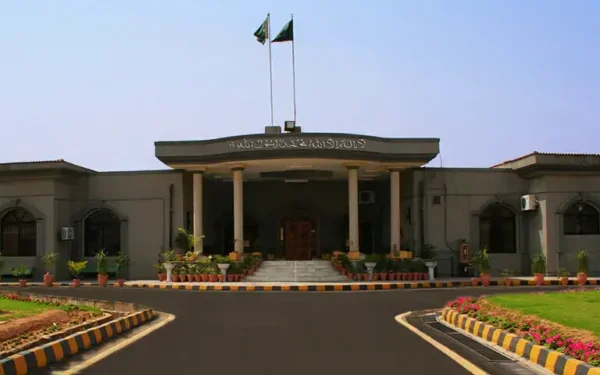
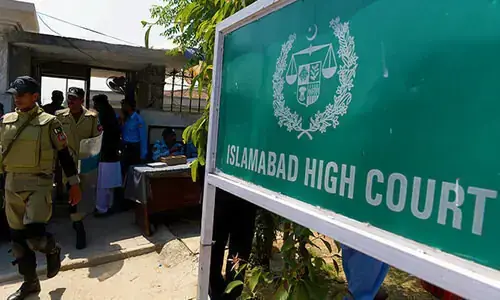
The Islamabad High Court (IHC) has directed the Pakistan Medical and Dental Council (PMDC) to examine the issue of excessive working hours for doctors, observing that requiring doctors to work up to 102 hours a week is inhuman.
Justice Raja Inaam Ameen Minhas heard a petition concerning the working hours of doctors and, with the consent of the parties, converted the writ petition into a representation before the PMDC.
The court directed the PMDC to decide the representation and place its recommendations before the federal and provincial governments for appropriate action.
The issue has gained significance due to comments submitted by the College of Physicians and Surgeons Pakistan (CPSP) before the court, which highlight the serious consequences of prolonged duty hours for both doctors and patients.
According to CPSP material, after approximately 18 hours of work, doctors develop psychomotor dysfunction equivalent to a blood alcohol level of 0.05, and at 24 hours of continuous duty, the impairment is equivalent to a blood alcohol level of 0.1.
The CPSP document further states that tired doctors make more mistakes than doctors who are fresh, alert, and properly supervised.
The CPSP’s objective, according to the document, should therefore be to reduce working hours to a level that allows for a healthy work-life balance for staff and ensures safe care for patients.
The CPSP document refers to international practices governing doctors’ working hours, including the European Working Time Directive, which provides for a maximum average working week of 48 hours, at least 11 consecutive hours of daily rest, and minimum weekly rest periods.
In the US, the document notes a maximum of 80 duty hours per week, averaged over four weeks, along with a minimum of one day free of patient-care responsibilities in seven days and limits on continuous duty.
The CPSP itself has recommended that residency programmes require a minimum of 48 duty hours per week for clinical specialties, excluding emergency duties and Sundays on call.
It also states that a trainee should not be required to undertake more than two night or emergency duties of 12 hours each in a week, while trainees assigned to emergency departments should not work shifts exceeding 12 hours.