Key Takeaways
- Finance Minister Muhammad Aurangzeb convened a meeting to reform the power sector regulatory framework.
- Investors express concerns over contract sanctity and demand binding legal guarantees.
- The government considers political risk guarantees from multilateral agencies to boost investor trust.
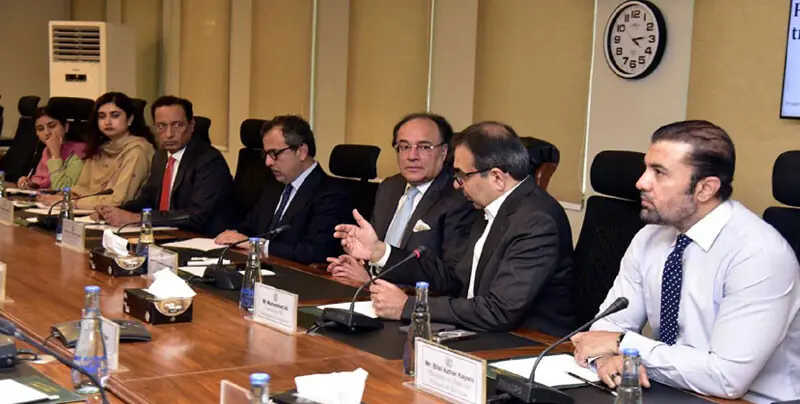
Finance Minister Muhammad Aurangzeb presided over a meeting of the Steering Committee on Power Sector Regulatory Regime and Reform Options on Wednesday. The meeting aimed to strengthen the power sector’s regulatory framework and promote efficiency, investment, competition, and private-sector participation.
Informed sources told Dawn that prospective bidders, both local and foreign, are currently undertaking due diligence of the first batch of distribution companies (Discos). These bidders have expressed concerns over contract sanctity and the need for binding legal guarantees to prevent post-privatisation contractual disputes.
The meeting came against the backdrop of heightened risk perception among investors, partly due to the recent legal developments involving K-Electric and the reopening of independent power producers’ (IPPs) contracts. Bidders have demanded longer licence tenures than the existing 20-year term for Discos.
Muhammad Ali, the prime minister’s adviser on privatisation, faces questions from prospective investors regarding regulatory and contractual guarantees. He was involved in renegotiations with IPPs that led to revised contracts during the PTI and PML-N tenures.
The finance minister noted that the evolving power sector landscape required a regulatory framework capable of responding to technological developments while supporting efficiency, investment, consumer interests, and greater private-sector participation. The meeting discussed key structural and emerging challenges facing the sector, including legacy capacity obligations, changing grid-demand patterns, service quality, investment constraints, and the need to further strengthen incentives for efficiency.
The discussion also focused on improving regulatory predictability, better targeting of subsidies, and strengthening the overall investment climate to support a more efficient, competitive, and financially sustainable power sector. The minister called for developing a market structure that provides clearer incentives for efficiency and service quality, while creating greater space for competition, private-sector participation, and investment.
The meeting coincided with a stay order from the Sindh High Court against recent decisions of the National Electric Power Regulatory Authority (Nepra) and its appellant tribunal regarding K-Electric’s Multi-Year Tariff (MYT). This decision effectively curtailed the federal government’s subsidy to K-Electric worth around Rs200 billion.
KE had challenged the appellant tribunal and Nepra decision in the Sindh High Court, which suspended those notifications and orders and issued notices to the respondents for a next date of hearing on October 15.
The finance minister-led committee also discussed the significant changes taking place in the power sector, including growing solarisation and changing demand patterns. The committee highlighted the need to address legacy capacity obligations, service quality, and investment constraints to support a more efficient and competitive power sector.