Key Takeaways
- Protest over missing teachers and inadequate resources has evolved into a wider movement.
- Students are calling for structural changes to address educational inequalities.
- The movement highlights growing political consciousness among young people.
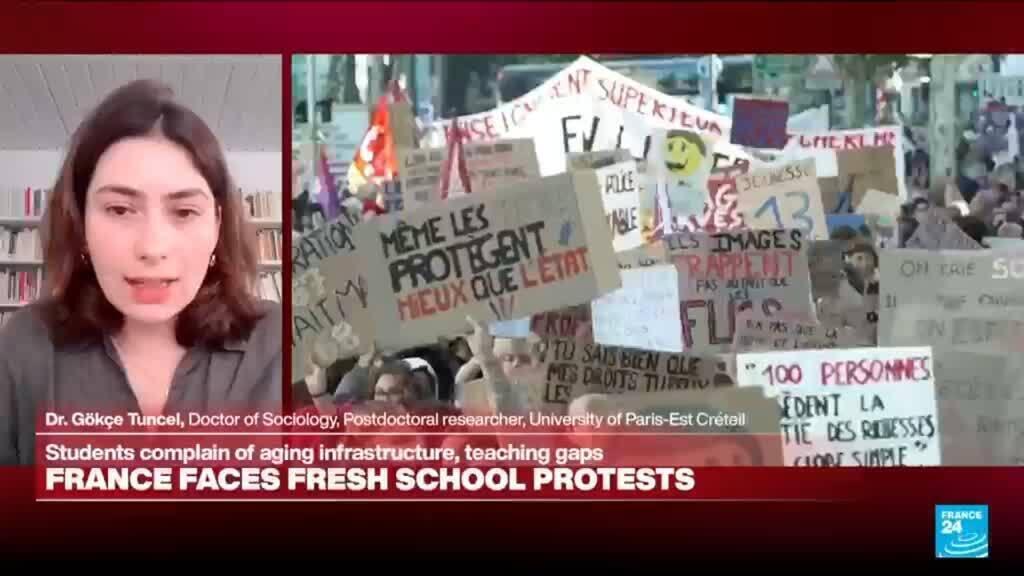
In a recent development, French students have expanded their protest from a single high school in Créteil to a broader movement, challenging systemic issues within the country’s public education system. The initial issue of missing teachers and insufficient resources has now become a platform for demands for fundamental changes.
Gökçe Tuncel, a sociologist and post-doctoral researcher associated with the Université Paris-Est Créteil (UPEC) and the School for Advanced Studies in the Social Sciences (EHESS), explains that the movement is not just about short-term solutions. 'This is a structural problem that they are denouncing, and their demands are structural changes,' she states.
The rapid expansion of the movement reflects more than the organizational power of social media. It indicates a growing political consciousness among young people who are confronting deteriorating educational infrastructure, unequal access to resources, and an increasingly uncertain future.
The protest has gained momentum, with students across the country joining the call for systemic reforms. This broader mobilization underscores the deep-seated concerns among the youth regarding the quality and accessibility of education.
According to Tuncel, the movement is part of a larger trend where young people are becoming more politically aware and active. 'The movement is a reflection of the political consciousness that is emerging among the youth,' she adds.
The demands of the students include not only better resources and more teachers but also a reevaluation of the entire education system to ensure equitable opportunities for all students. This includes addressing issues such as funding disparities, curriculum reform, and teacher training programs.
The expansion of the protest has also led to increased media attention and public discourse on the state of education in France. Various stakeholders, including policymakers and educational experts, are now engaging with the students to understand their concerns and explore potential solutions.
While the exact outcomes of the movement remain uncertain, the growing participation and the clear demands of the students suggest a significant shift in the political landscape of French education. The future of the movement will depend on the extent to which these structural changes are implemented and the impact they have on the education system.
This is not a problem of short-term solutions. This is a structural problem that they are denouncing, and their demands are structural changes.
Gökçe Tuncel, Sociologist and post-doctoral researcher