Key Takeaways
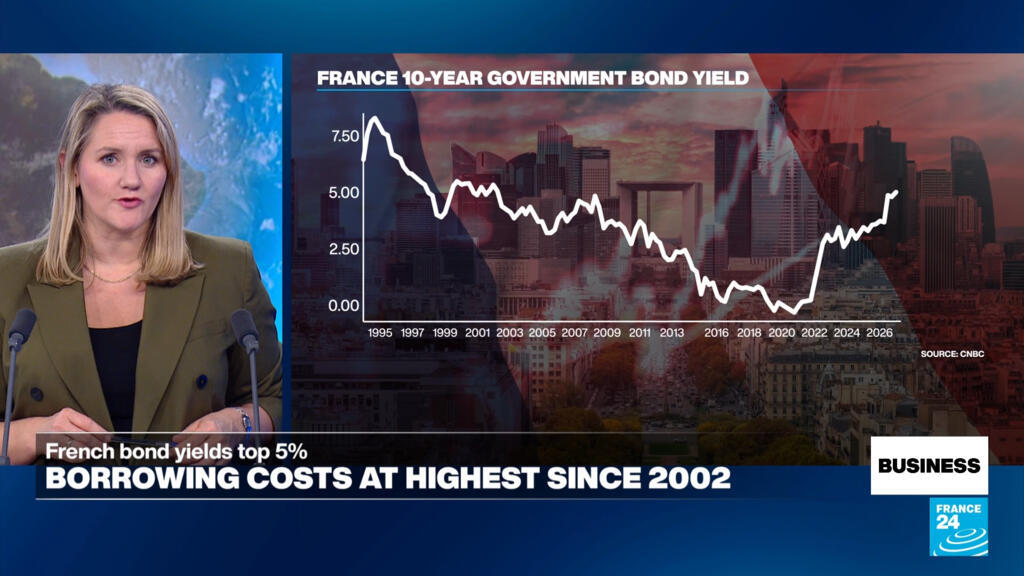
- French bond yields hit 5%, the highest since 2002, due to unrest.
- Investors express concern over France's financial stability.
- Government faces challenges with budget and debt issues.
French bond yields have surged to 5%, their highest level in 24 years, following widespread protests and violence over the weekend. This significant rise indicates a loss of investor confidence in the French economy, particularly as the government struggles with budget and debt problems.
The unrest has sparked concerns among financial markets, with yields on French government bonds reaching a 24-year high. This development reflects the growing uncertainty surrounding the country's economic stability and fiscal health.
The situation has drawn attention to the ongoing challenges faced by the French government, which is grappling with budgetary constraints and debt issues. The recent protests have exacerbated these concerns, leading to a marked increase in bond yields.
Investors are now closely monitoring the situation, with many expressing reservations about the future of French bonds. The high yields could potentially impact the cost of borrowing for the French government, which may have to pay higher interest rates on its debt.
The unrest has also highlighted the broader economic issues facing France, including rising costs and social tensions. These factors have contributed to the current market sentiment and the increased bond yields.
The government's response to the protests and the economic challenges will be crucial in determining the future trajectory of bond yields. Any measures to address the underlying issues could help stabilize the market, while continued unrest could lead to further volatility.
In a related development, chipmaker Nvidia has announced a significant investment of $10 billion in European tech firms to support the 'AI economy.' This move underscores the growing importance of technology and innovation in the region, despite the current economic uncertainties.
Meanwhile, the UK has approved a controversial natural gas field, a decision that has faced criticism from environmentalists and opposition parties. This move comes as Prime Minister Andy Burnham faces increasing pressure to address rising energy costs and ensure energy security.