Key Takeaways
- FIFPRO Europe calls for FIFA reforms, citing governance flaws.
- FFE proposal, aimed at converting competitions into financial assets, was abandoned.
- Union urges inclusion of players, clubs, and leagues in football governance.
European soccer players' union FIFPRO Europe has called for significant reforms to FIFA's decision-making structures, citing the recent withdrawal of the Forward Enterprise (FFE) proposal as evidence of underlying governance issues.
FFE was intended to convert FIFA's flagship competitions into assets for private capital, but was abandoned amid widespread opposition. FIFPRO Europe argues that the governance shortcomings that allowed the proposal to be developed remain unresolved.
The union released a study produced with Player IQ and Football Benchmark, which highlighted the need to protect football's 'critical infrastructure' and called for an independent review of FIFA Council executive decision making.
According to the report, European clubs employed 856 players at the expanded 2026 World Cup and released players worth about 16.9 billion euros ($19.8 billion), representing 94% of the tournament's total player value.
All 20 individual award winners across the last five World Cup editions were employed by European clubs, underscoring the dominance of European clubs in the sport.
FIFPRO Europe also noted that the share of World Cup revenue distributed as prize money to participating countries had fallen to about 7.7% in 2026 from 10.5% in 2006, despite strong growth in tournament revenue.
The union emphasized that players receive only a fraction of the return, while participating federations rely on it as FIFA's only performance-based revenue stream.
In a wider debate over the balance of power in the global game, FIFPRO Europe supports efforts to increase development funding for smaller federations but argues that any solidarity mechanism should be shaped jointly by stakeholders across the game.
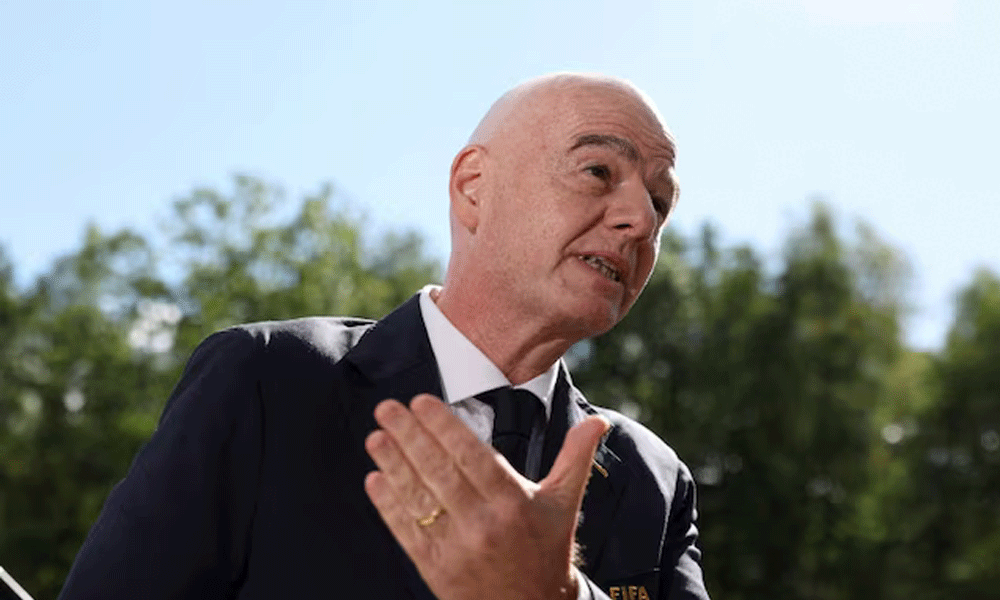
FIFA President Gianni Infantino has confirmed that he will run in the upcoming presidential election, adding to the ongoing discussions about the future of football governance.
Related