Key Takeaways
- Chinese blue-chip CSI300 Index fell 1.3% by lunch break.
- Hong Kong’s Hang Seng Index was down 0.5%.
- Investors remain skeptical about the outcome of the Trump-Xi summit.
Chinese and Hong Kong stocks experienced a decline on Thursday, with the blue-chip CSI300 Index dropping by 1.3% by the lunch break, while the Shanghai Composite Index lost approximately 1%. The Hang Seng Index in Hong Kong also saw a 0.5% decrease.
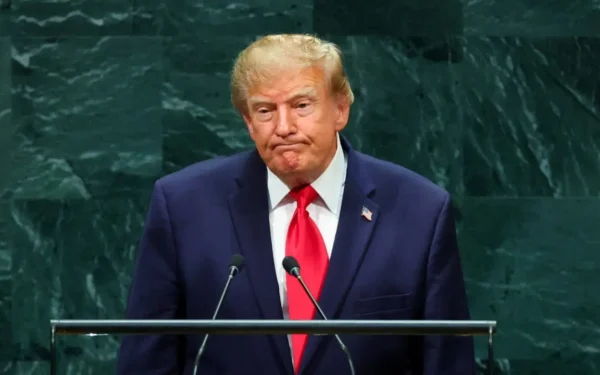
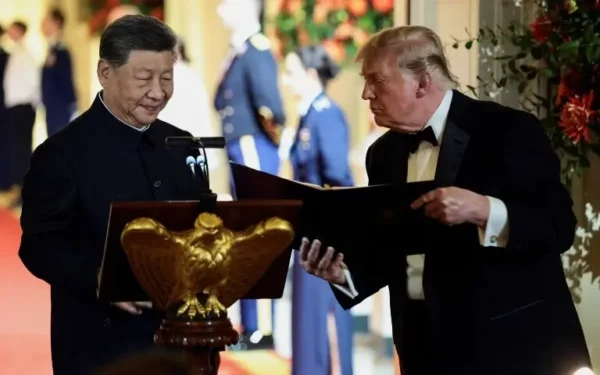
The market reaction was largely driven by investor skepticism regarding the outcome of the summit between US President Donald Trump and Chinese President Xi Jinping, which took place in Washington. The meeting, marking Xi’s first visit to the US in nearly three years, was expected to address significant issues between the two superpowers but did not yield major breakthroughs.
Treasury Secretary Scott Bessent announced that the US and China agreed to extend their trade truce by two months, a move that was described as 'shorter than market expectations' for a one-year extension. However, this agreement did not significantly boost investor confidence, as UBS noted in a sales note.
The absence of a delegation of Chinese business leaders during Xi’s visit also weighed on sentiment. Beijing had hoped to bring such a delegation for meetings with Trump, but this did not materialize, according to Reuters, citing sources.
Most sectors experienced a decline by midday, with gold equities, materials, and AI hardware stocks leading the downturn. The broader market also mirrored overnight weakness on Wall Street, where higher oil prices and rising US Treasury yields dampened investor sentiment.
On the other hand, energy and shipping stocks listed in Hong Kong outperformed, suggesting some sectors remained resilient despite the overall market decline.
Sanjeev Rana, head of north Asia semiconductors research at CLSA, expressed cautious optimism, stating that while there are expectations around Beijing and Washington working together on AI development and making AI safe, he does not foresee any relaxation on the chip export controls from the US side.
Charles Wang, chairman of Shenzhen Dragon Pacific Capital Management, offered a more positive outlook. He stated, 'Trump is a very pragmatic president, and he understands comparative strength in the global economy very well. I think US-China relations is evolving from outright confrontation, toward mutual understanding, compromise and a framework of co-existence.'
Trump is a very pragmatic president, and he understands comparative strength in the global economy very well.
Charles Wang, Chairman of Shenzhen Dragon Pacific Capital Management