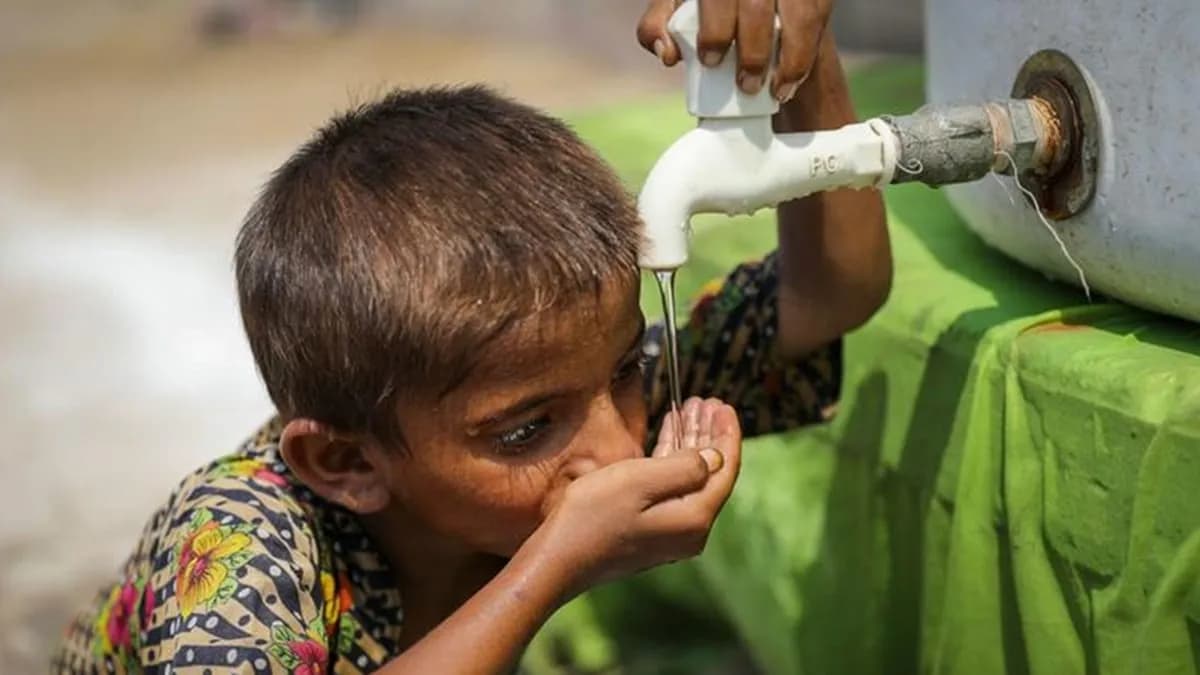
The World Bank has approved $300 million in financing to expand access to clean drinking water, sanitation, and hygiene services for 1.5 million people across selected rural areas of Sindh. The funding will support the first phase of the Sindh Transformational Accelerated Rural Water Supply, Sanitation, and Hygiene Services Project, known as STAR WASH-1.
The project aims to tackle unsafe water supplies and poor sanitation, which the World Bank states contribute to widespread child malnutrition and stunted growth in the province. Currently, more than half of children under five in rural Sindh suffer from stunted growth. The World Bank reports that repeated bouts of diarrhea from contaminated water and poor sanitation prevent young children from properly absorbing nutrients, which impacts their physical and cognitive development.
Bolormaa Amgaabazar, World Bank Country Director for Pakistan, stated that "Stunting is among Pakistan’s most severe and persistent human capital challenges, and unsafe water, sanitation and hygiene is a major underlying driver." She noted that expanding access to these services would help address one of the underlying causes of child stunting.
STAR WASH-1 will finance climate-resilient infrastructure, including improved sanitation facilities and solar-powered water supply systems. The initiative also includes a social and behavior change program to promote better personal and environmental hygiene. The project's goals include halving water contamination at the point of use and connecting 80 percent of targeted rural communities to professional water and sanitation service providers.
The initiative intends to shift the focus toward establishing rural water and sanitation services that are safe, sustainable, and financially viable, rather than just building infrastructure. It is expected to generate more than 14,000 jobs and will support the formalization of the Sindh People’s Housing for Flood Affectees as a rural water and sanitation utility company.
Bekele Debele Negewo, Lead Water Resources Management Specialist at the World Bank, said investments in water and sanitation go beyond infrastructure development by strengthening human capital and supporting healthier, more productive communities.
STAR WASH-1 is the first phase of a four-phase Pakistan Rural Water, Sanitation, and Hygiene Services Program, which will be implemented over 10 years. The initiative aligns with the World Bank Group’s Water Forward initiative, which identifies water security as a foundation for employment, investment, economic growth, human development, and resilience.
The total project cost stands at $540 million. In addition to the World Bank’s $300 million financing, the Asian Development Bank will contribute $150 million under a recently agreed Full Mutual Reliance Framework. The Government of Sindh will provide the remaining $90 million equivalent in counterpart funding.