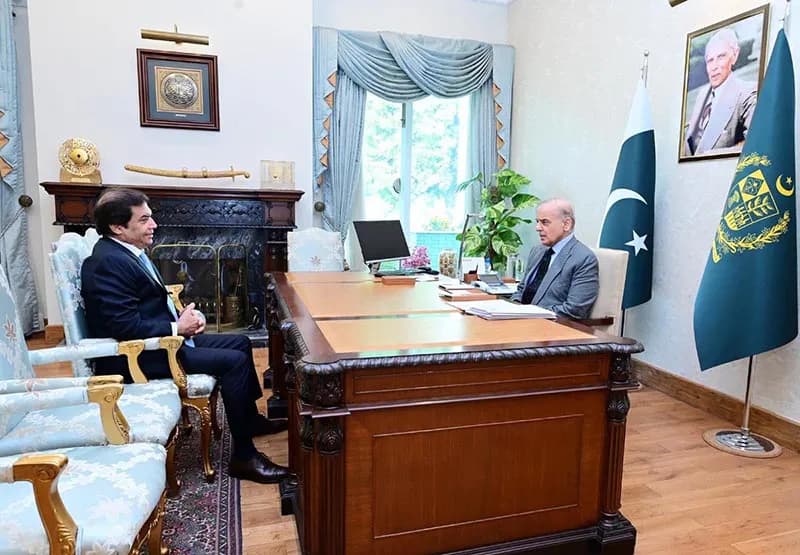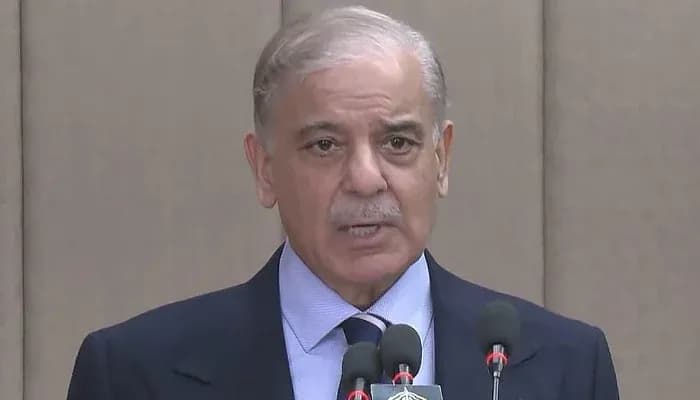
ISLAMABAD: Prime Minister Shehbaz Sharif called for national unity and difficult decisions to free Pakistan from its mounting debt on Sunday. Addressing participants of the National Security Workshop in Islamabad, Sharif said a collective commitment by political parties and all sections of society could help the country achieve economic self-reliance.
Sharif stated that Pakistan's debt has continued to grow over the past 80 years. He said the country could overcome the burden if the nation joined hands and took the necessary decisions. The prime minister attributed some economic difficulties to subsidies, arguing that the funds used for them came from taxpayers. He said Pakistan could have moved forward without relying on such financial support.
The premier also drew attention to the enormous sums spent on loss-making state-owned enterprises and the problem of tax evasion. He said the objective was not to assign blame but to identify the causes of these problems and find solutions.
Regarding the government's performance over the past two-and-a-half years, Sharif said it had addressed several issues with the cooperation of political parties in parliament, although more work remained. He recalled criticism following the government's decision to close the Pakistan Public Works Department (PWD), claiming that the move had stopped corruption amounting to Rs100 billion.
Sharif also defended the closure of the Utility Stores Corporation, saying it had been plagued by large-scale corruption, with people made to queue for substandard food items. He said the government had instead introduced digital wallets to transfer assistance to beneficiaries, saving the country hundreds of billions of rupees in corruption.
Turning to foreign policy, Sharif highlighted Pakistan's diplomatic efforts to bring the United States and Iran to the negotiating table in Islamabad after 47 years. He praised the contributions of Chief of Defence Forces and Chief of Army Staff Field Marshal Syed Asim Munir and Deputy Prime Minister Ishaq Dar in this regard.
Sharif said Pakistan maintains strong relations with the United States and Gulf countries, particularly Saudi Arabia. He referred to the defence agreement signed with Riyadh last year and trilateral defence cooperation between Pakistan, Saudi Arabia and Turkiye. He said these partnerships are intended to advance regional peace, security and prosperity and are not directed against any country. He also referred to Marka-e-Haq, saying Pakistan had dealt a severe blow to India during the brief conflict.
The prime minister stressed that Pakistan needs to turn its diplomatic and strategic achievements into economic benefits, warning that opportunities should not be allowed to pass by. He said the FBR had recovered Rs900 billion through enforcement measures during the fiscal year 2025-26. Sharif identified indirect taxes, particularly sales tax, as the biggest source of tax evasion within the revenue authority.
Recalling a meeting with the International Monetary Fund's managing director in the United States, Sharif said she had described Pakistan as a changed country. He attributed the progress to sincerity, hard work and sustained efforts.
Sharif said GDP growth had been projected at 3.5%, but stressed that the country must raise it to at least 6% as soon as possible. He said Pakistan's foreign exchange reserves are at their highest level in history, but questioned whether the country wanted to remain dependent on external assistance or pursue a future based on dignity and self-reliance. He said the latter requires hard work and honesty.
Sharif said exports had increased by 8% during the first quarter of the current financial year, while IT exports had reached $4.6bn in the previous fiscal year. He emphasised that considerably more needs to be done to improve the country's export performance.
The prime minister also expressed disappointment over the lack of progress in agriculture, saying the sector had not received the attention it required. He maintained that meaningful improvements could be achieved within six months, identifying hard work as the key requirement. Sharif said the government is working with provincial administrations to expand technical, vocational and skills training opportunities for the country's youth.