Electricity consumers across Pakistan, including Karachi, may face a tariff increase of Rs1.34 per unit for three months from December 2026 to February 2027. This potential hike follows a request by power distribution companies to recover Rs23.33 billion in additional costs related to the July-September 2026 quarter.
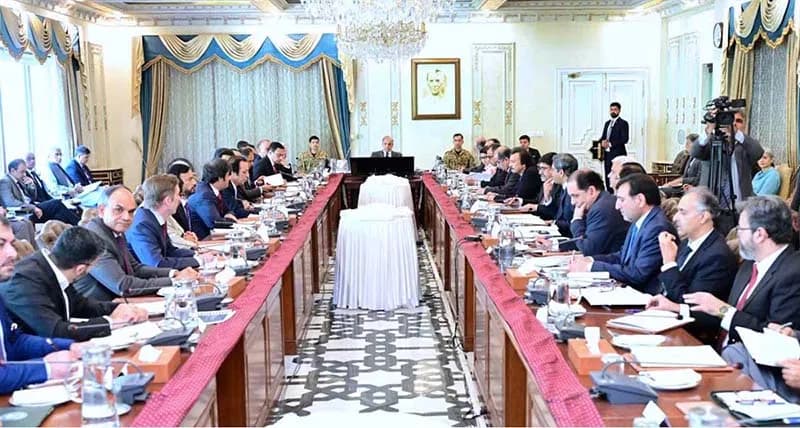
The National Electric Power Regulatory Authority (Nepra) concluded a public hearing on Tuesday to examine these quarterly adjustment claims. Nepra Chairman Waseem Mukhtar presided over the hearing, and the regulator has reserved its decision for a later announcement. Under the government's uniform electricity tariff policy, the proposed increase would apply nationwide, including consumers served by K-Electric.
Distribution companies sought a positive adjustment primarily driven by higher capacity payments, transmission and distribution losses, and operation and maintenance costs. Capacity charges represent the largest component of the request, with companies seeking Rs38.917 billion. Other claims include Rs7.79 billion for the impact of transmission and distribution losses on monthly fuel cost adjustments and Rs5.597 billion in variable operation and maintenance costs.
These costs are partially offset by a proposed reduction of Rs29.252 billion resulting from incremental electricity consumption under a government incentive package. Additionally, the impact of use-of-system charges and the Central Power Purchasing Agency's market operator fee account for a further net positive adjustment of Rs272 million. The capacity payment claim also incorporates the impact of net metering and net billing units.
Nepra noted that distribution companies included the impact of transmission and distribution losses in their September fuel cost adjustment calculations, though the regulator had not yet notified that specific adjustment. The calculations are based on the fuel cost adjustment requested by the Central Power Purchasing Agency-Guarantee (CPPA-G).
Separately, consumers of ex-Wapda distribution companies may face an increase in energy rates of up to Rs2.88 per unit for October 2026 due to a fuel cost adjustment (FCA). The CPPA-G has sought an increase of Rs2.8819 per unit over the reference fuel cost of Rs7.8696 per kilowatt-hour for October 2026. This proposed increase would also apply to K-Electric consumers under federal policy guidelines for uniform fuel charges adjustments.
Data shows the actual fuel cost of electricity supplied to distribution companies during the month under review was Rs10.7515 per unit, against the reference cost of Rs7.8696 per unit. In October 2026, power plants generated 10,744 gigawatt hours (GWh) of electricity, with 10,352 GWh delivered to distribution companies after accounting for transmission losses and sales to independent power producers.
Hydel power was the largest source of generation, contributing 2,818 GWh (26.23%), followed by nuclear power at 2,090 GWh (19.45%). Other sources included imported coal-based plants (1,569 GWh or 14.60%), local coal-based plants (1,360 GWh or 12.66%), gas-based plants (1,090 GWh or 10.15%), and RLNG-based generation (757 GWh or 7.04%). The mix also included residual fuel oil (351 GWh), wind power (316 GWh), high-speed diesel (198 GWh), solar power (99 GWh), imports from Iran (53 GWh), and bagasse-based plants (42 GWh).
Expensive fuels continued to drive costs, with high-speed diesel costing Rs69.5883 per unit, residual fuel oil at Rs46.4281 per unit, and imports from Iran at Rs31.7337 per unit. The overall fuel cost of generation was calculated at Rs10.6227 per unit, but the net cost passed to distribution companies reached Rs10.7515 per unit after incorporating previous adjustments, RLNG fuel rate adjustments, and transmission losses.
Nepra has scheduled a public hearing for November 26 at the Nepra Tower in Islamabad and via an online platform to consider the CPPA-G request for the October fuel charges adjustment. The regulator has invited interested and affected parties to submit written or oral objections during the hearing.