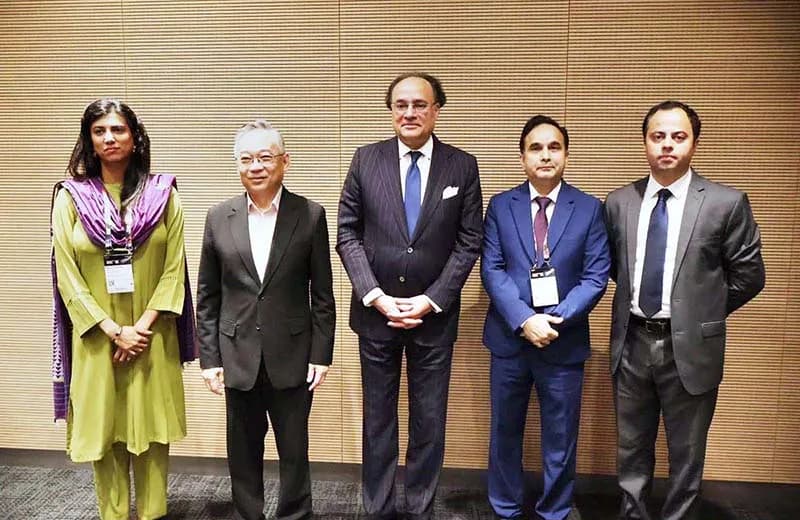
Adviser to the Prime Minister on Privatisation, Muhammad Ali, stated on Thursday that the principles of Clarity, Cooperation, and Consistency (the 3Cs) are necessary to drive sustainable economic transformation, attract private investment, and reduce the fiscal burden of State-Owned Enterprises (SOEs). Speaking at the 6th Pakistan Prosperity Forum organized by the Policy Research Institute for Market Economy (PRIME), Ali emphasized that building investor confidence is a nation’s greatest economic advantage during periods of global and regional uncertainty.
Ali noted that while Pakistan cannot control external geopolitical tensions or global energy disruptions, it can strengthen domestic resilience through structural reforms to promote clarity. He stressed that privatisation is a vital mechanism to mobilize private capital, enhance operational efficiency, and deliver lasting economic value, rather than being an end in itself.
Highlighting the unsustainable cost of the current status quo, Ali revealed that during the first half of Fiscal Year 2026, SOEs recorded aggregate losses of Rs 342.8 billion. He further stated that government fiscal support surged by 31% to Rs 804 billion compared to the previous year. Ali underscored that the government’s core mandate is policy formulation and fair regulation rather than operating commercial businesses, even profitable ones, where no compelling public interest exists.
The Adviser noted that recent landmark transactions reflect a shift toward bringing in fresh capital, management expertise, and innovation rather than focusing solely on sale proceeds. He highlighted Pakistan International Airlines (PIA), where the initial closing in June 2026 injected Rs 80 billion in new equity into the airline alongside Rs 10 billion in sale proceeds. A second closing in June 2027 is set to bring an additional Rs 90 billion, consisting of Rs 45 billion for the government and Rs 45 billion for the entity.
Ali called for strong cooperation between public institutions, private enterprises, employees, and regulators, noting that the government cannot achieve economic transformation alone. He elaborated on the need for such cooperation regarding the ongoing privatisation of Batch-1 power distribution companies (IESCO, GEPCO, and FESCO). He stated that privatisation must proceed alongside electricity market liberalization, transparent tariff methodologies, and clear dispute resolution mechanisms to avoid transferring protected monopolies from public to private hands.
The Adviser also highlighted the expanding federal Public-Private Partnership (PPP) pipeline as a key driver of infrastructure development. He noted that only yesterday, the P3A Board approved construction of the first two sections of M-6 Motorway (Hyderabad–Sukkur) on a Public-Private partnership basis at an estimated investment of USD 672 million under a 25-year concession model, supported by proposed Viability Gap Funding of USD 156 million for Section I. Other major upcoming projects offered for Public-Private partnership include the Karachi Industrial Park, Islamabad Technopolis, and CDA Hospital.
Concluding with an emphasis on Consistency, Ali affirmed that long-term investment requires predictable policies and contractual stability, free from frequent reversals. While private operators must adhere to strict competition laws, environmental standards, and consumer safeguards, he stated that commercial risks must remain with private owners rather than reverting to taxpayers through implicit guarantees or bailouts.
“Clarity establishes the direction, cooperation brings together the capital and expertise to realize opportunities, and consistency ensures commitments translate into lasting results,” Ali said at the event.