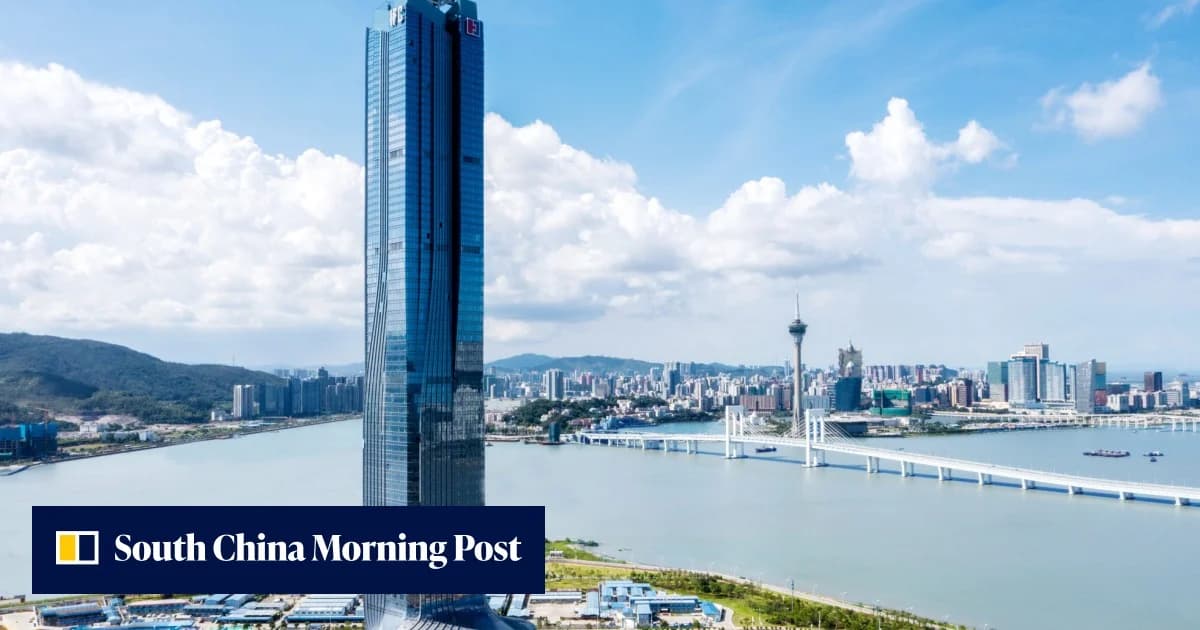
Fitch Ratings placed Zhuhai Huafa Group on Rating Watch Negative on Thursday. Its long-term issuer default rating remained at BBB and was under review for a possible downgrade.
Fitch said in its rating action commentary that Huafa’s ratings are underpinned by the expectation that extraordinary government support is extremely likely. Zhuhai Huafa Group, the largest local government-owned enterprise in Zhuhai in southern China’s Guangdong province, carried more than 413 billion yuan (US$62 billion) in total debt against 765 billion yuan in assets as of March, according to China Lianhe Credit Rating.
More than 93 per cent of the group's equity is owned by Zhuhai’s State-owned Assets Supervision and Administration Commission. Bloomberg reported that the company failed to repay two trust products and was seeking extensions on maturing bank loans. A later Bloomberg report said the company had repaid some investors in one of the overdue trust products. Huafa also announced plans to service interest payments on two publicly traded bonds totalling about 55 million yuan on Tuesday and Wednesday.
Macquarie Group reported that the credit bond ETF index fell 0.5 per cent on Friday. The report from Macquarie Group stated that Huafa’s losses are mounting as the property downturn drags on. Macquarie added that the risk of wider contagion appeared to be limited, citing Guangdong’s fiscal strength and capacity to support Huafa.
The brokerage also noted the People’s Bank of China’s new liquidity facility for non-bank financial institutions. Zhang Zhiwei, president and chief economist at Pinpoint Asset Management, said the case reflected the breakdown of the old growth model that relied on property development to expand the economy and generate local government fiscal revenue through land sales.
Zhang said, “Authorities have been searching for a new operating model for local public finance.”
Zhang added, “But despite years of exploration, they have yet to find an approach that is sustainable over the long haul while continuing to support broader economic growth.” China Zheshang Bank said that any repayment crisis on Huafa’s publicly traded bonds would inevitably impair the financing environment for other municipal state-owned enterprises and weaken the asset quality of local banks.
A note from China Zheshang Bank stated that the city’s limited fiscal resources made an outright fiscal cash bailout unrealistic. China Zheshang Bank added that at the provincial level, Guangdong possesses top-tier fiscal strength and institutional coordination capacity nationwide.