Research Fellow at the China International Press Communication Centre (CIPCC), Muhammad Zamir Assadi, stated on November 21 that China-Pakistan Economic Corridor (CPEC) 2.0 can play a significant role in connecting Pakistan with regional value chains across the Asia-Pacific region. Assadi said this can be achieved by promoting trade, investment, technological cooperation, industrial development, and regional connectivity.
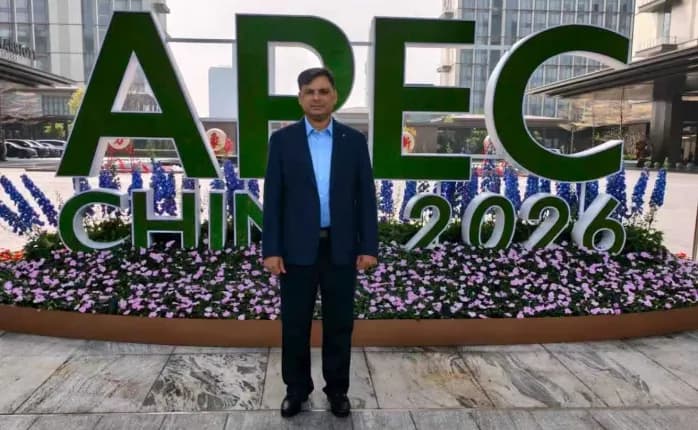
In a statement issued in Islamabad, Assadi noted that the 33rd APEC Economic Leaders’ Meeting in Shenzhen offered new opportunities for Pakistan to strengthen economic engagement with Asia-Pacific economies, specifically China and other regional countries. He observed that the summit outcomes aligned with the APEC 2026 theme of “Openness, Innovation and Cooperation,” which he described as an important framework for strengthening regional economic partnerships and expanding cooperation among economies seeking closer integration with Asia-Pacific markets.
Assadi said Pakistan could benefit from these discussions by consolidating economic ties with China and expanding trade and investment cooperation with other APEC member economies, including Japan, South Korea, Singapore, Malaysia, Australia, and Indonesia. He observed that Pakistan has considerable potential to emerge as an important economic partner in the Asia-Pacific region due to its strategic geographical location, young workforce, agricultural resources, industrial capacity, and strong connectivity with China.
Highlighting the key areas discussed at the summit, Assadi said the focus on digitalization, artificial intelligence, resilient supply chains, clean energy, small and medium-sized enterprises (SMEs), and infrastructure connectivity was closely aligned with Pakistan’s development priorities and the next phase of CPEC. He said CPEC 2.0 could serve as an effective platform for translating the broader vision of Asia-Pacific cooperation into tangible economic opportunities.
Assadi identified industrial cooperation, agriculture, innovation, green development, and regional connectivity as key priority areas. He added that these sectors could help enhance Pakistan’s productive capacity, attract investment, boost exports, and improve the country’s integration into regional and global value chains.
Furthermore, Assadi highlighted significant opportunities for cooperation with Chinese and other international companies in joint ventures, the establishment of industrial parks, modernization of the agricultural sector, development of mineral resources, digital services, and renewable energy projects. He said China’s efforts to promote an open and interconnected Asia-Pacific region, alongside the advancement of CPEC 2.0, had created greater opportunities for linking Pakistan’s national development agenda with emerging regional economic prospects. He emphasized that the real success of the Shenzhen summit would be reflected in practical cooperation, increased investment, stronger trade relations, and tangible economic benefits for the people across the region.