LIVE Watch Now Punjabi News Channel from Pakistan
Breaking
Italy deploys troops to secure Milan amid protestsPakistan’s minorities face ongoing legal and social challengesICC fines Pakistan, Sri Lanka for slow over-rates in tri-seriesChinese firm withdraws from Sri Lanka port logistics projectHealth Secretary Inspects PIMS Hospital to Address Operational IssuesBOP Leads Rs17bn Islamic Project Finance for Novacare HospitalsIslamabad Police to Impose Strict Measures on Unlicensed and Underage DriversFCC rules field workers of SLIC are not regular employeesKarachi Endures Severe Heat as Temperature Reaches 39°CEU Ambassador and FPCCI President Discuss Trade ExpansionTaiwanese Server Makers Expand Mexico Operations Amid AI BoomAI chip cooling reaches kilowatt scaleAI tool predicts cancer survival from patient selfiesElon Musk’s SpaceX Shares to Be Distributed Through Trump AccountsUS grants temporary reprieve to Ukrainian and Sudanese migrantsNew rules to prevent ‘rip-off’ private parking fines announcedCalifornia to receive $6m settlement in 23andMe data breachColorado wildlife overpass reduces animal-vehicle collisions by 91%Plex media server users urged to patch systems to avoid malwareRussian satellite maneuvers near Ukrainian imaging satelliteItaly deploys troops to secure Milan amid protestsPakistan’s minorities face ongoing legal and social challengesICC fines Pakistan, Sri Lanka for slow over-rates in tri-seriesChinese firm withdraws from Sri Lanka port logistics projectHealth Secretary Inspects PIMS Hospital to Address Operational IssuesBOP Leads Rs17bn Islamic Project Finance for Novacare HospitalsIslamabad Police to Impose Strict Measures on Unlicensed and Underage DriversFCC rules field workers of SLIC are not regular employeesKarachi Endures Severe Heat as Temperature Reaches 39°CEU Ambassador and FPCCI President Discuss Trade ExpansionTaiwanese Server Makers Expand Mexico Operations Amid AI BoomAI chip cooling reaches kilowatt scaleAI tool predicts cancer survival from patient selfiesElon Musk’s SpaceX Shares to Be Distributed Through Trump AccountsUS grants temporary reprieve to Ukrainian and Sudanese migrantsNew rules to prevent ‘rip-off’ private parking fines announcedCalifornia to receive $6m settlement in 23andMe data breachColorado wildlife overpass reduces animal-vehicle collisions by 91%Plex media server users urged to patch systems to avoid malwareRussian satellite maneuvers near Ukrainian imaging satellite
◕ SundialUpdated 21 hours ago
Trending
Science & Health

AI tool predicts cancer survival from patient selfies

Doctors develop AI tool to estimate patient biological age and predict cancer survival from a single face photograph.

Add Sun News on Google News
AI tool predicts cancer survival from patient selfies
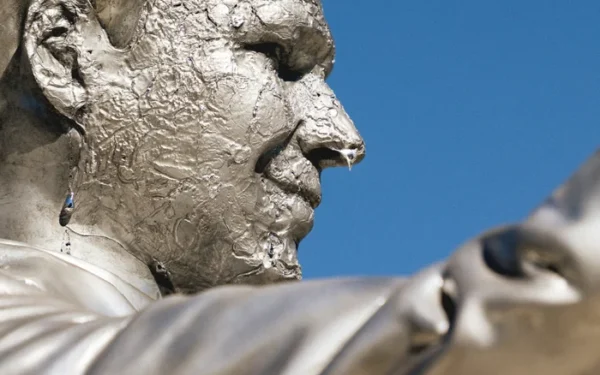
A patient's facial features are analyzed by an AI tool to predict cancer survival.

Key Takeaways

  • Doctors have developed an AI system to estimate a patient's biological age and predict cancer survival.
  • The tool uses a single photograph of the patient's face to provide crucial information.
  • This breakthrough could revolutionize personalized cancer treatment plans.

Doctors at Mass General Brigham, a nonprofit, integrated academic healthcare system in Massachusetts, have developed an artificial intelligence (AI) tool capable of predicting a cancer patient's chances of survival from a single photograph of their face.

The AI system, custom-built by the experts, can estimate the patient's biological age and directly predict survival outcomes in patients diagnosed with cancer.

This innovative technology could significantly enhance personalized cancer treatment plans, offering patients and their healthcare providers a clearer understanding of the patient's prognosis.

AdvertisementFollow Sun NewsWatch Live

The system works by analyzing facial features and other visual cues to estimate the patient's biological age, which is often a better indicator of health than chronological age.

By integrating this information with the patient's medical history, the AI tool can provide a more accurate prediction of survival rates, potentially leading to more effective and tailored treatment strategies.

While the technology is still in the research phase, its potential impact on cancer care is significant, offering a non-invasive and quick method to assess patient outcomes.

Further studies are needed to validate the tool's accuracy and reliability across a broader range of patients and cancer types.

Experts believe that this breakthrough could pave the way for more personalized and effective cancer treatments, ultimately improving patient outcomes.