Key Takeaways
- OpenAI has claimed a solution to the Navier-Stokes equations, one of the Millennium Prize Problems.
- Controversy arises as researchers from New York University and Anthropic had their work stored on OpenAI’s servers.
- Mathematicians are divided on the impact of AI in their field.
OpenAI has announced a significant breakthrough in the field of mathematics by solving the Navier-Stokes equations, a problem that has eluded mathematicians for decades. This solution, which could earn the solver a $1 million prize from the Clay Mathematics Institute, has sparked controversy within the mathematical community.
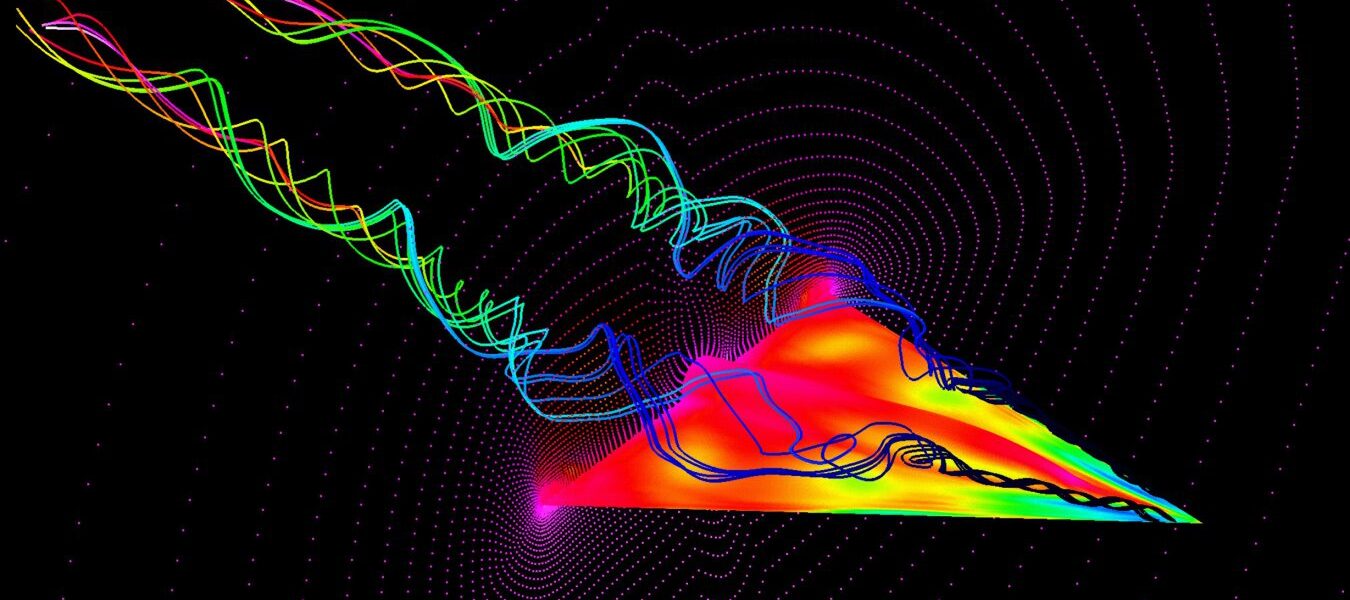
The Navier-Stokes equations are crucial for modeling fluid dynamics, including air flow over aircraft wings and blood flow in veins. The challenge lies in determining whether these equations always work or if there are scenarios where they fail, a concept known as 'blow-ups'.

OpenAI's solution, while not yet peer-reviewed, has been formalized, meaning it has been turned into computer code. This process ensures the accuracy of the results, according to the company.
However, the announcement has raised eyebrows due to the involvement of researchers Tristan Buckmaster from New York University and Levent Alpöge from AI company Anthropic. These researchers had their work stored on OpenAI’s servers, raising questions about the transparency and fairness of the process.
Buckmaster, in a statement, expressed concerns about the opaque responses he received from OpenAI. He pointed out that his work was stored on OpenAI’s servers, suggesting a potential conflict of interest. OpenAI, however, has denied any wrongdoing, stating that no person or AI from the company had seen Buckmaster and Alpöge’s work, and that their solution was different.
The controversy highlights the growing impact of AI in mathematics. In recent months, AI has made rapid progress on complex mathematical problems, leading to both excitement and fear among mathematicians. Some are enthusiastic about the potential of AI to advance the field, while others are concerned about the implications for their careers.
Mathematicians are now faced with the challenge of integrating AI into their work and determining how to credit results generated by AI. The field is likely to undergo significant changes, and the community is grappling with how to navigate this new landscape.
While more details will emerge as full papers of the work are published, the incident underscores the transformative role that AI is playing in mathematics and the need for the community to adapt to these changes.