Key Takeaways
- Finance Minister Muhammad Aurangzeb calls for reform of international financial architecture.
- Pakistan highlights challenges like trade disruption and climate shocks.
- Aurangzeb outlines priorities for G-24: restoring development, making Bretton Woods institutions more representative, and building a development-oriented architecture.
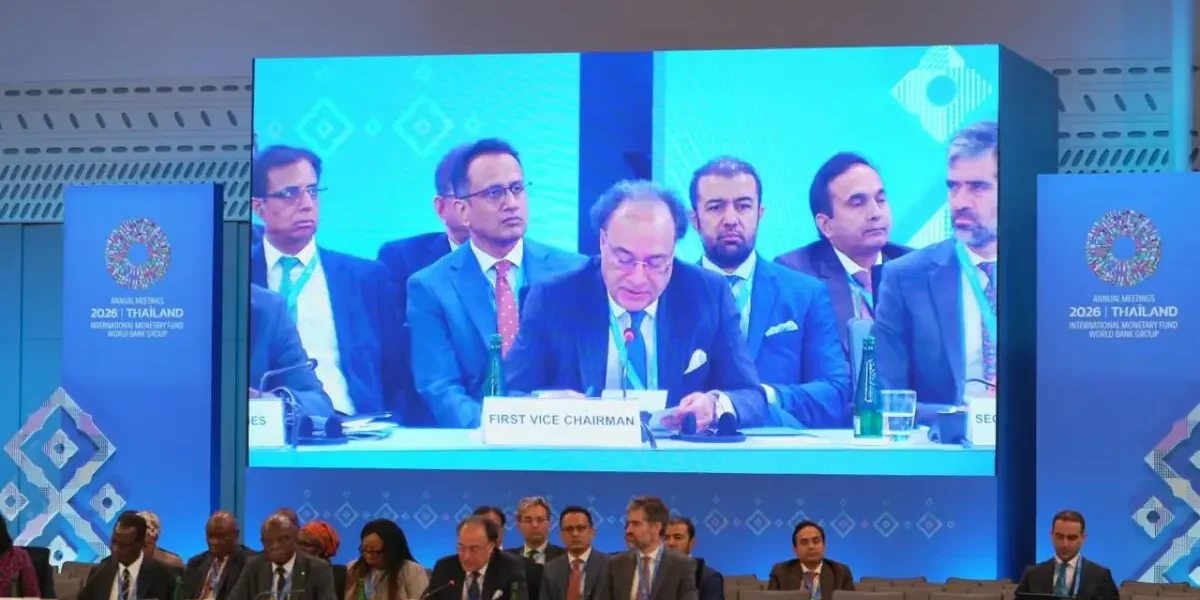
Finance Minister Muhammad Aurangzeb, speaking at the Finance Ministers and Central Bank Governors’ Meeting, highlighted the pressing challenges faced by developing economies, including trade disruption, climate shocks, and restrictive financial conditions.
Aurangzeb, in his capacity as First Vice-Chair of the G-24, emphasized the need for timely support for countries dealing with external shocks beyond their control, stressing the importance of reforming the international financial architecture to keep pace with these challenges.
He outlined three key priorities for the G-24: restoring development as the central objective of the international financial system, making the Bretton Woods institutions more representative and responsive, and building a development-oriented international financial architecture.
Aurangzeb also addressed the demographic transition in Pakistan, emphasizing the urgency of addressing rapid population growth and its implications for health, education, and employment.
Drawing on experiences from Indonesia, Bangladesh, and Iran, he highlighted the importance of women’s education, workforce participation, and engagement with religious leaders on birth spacing as key priorities.
He outlined the establishment of a National Population Council led by the prime minister and emphasized coordinated federal and provincial action, sustained political commitment, and measurable outcomes to bring fragmented initiatives into a comprehensive framework.
The finance minister stressed that realizing Pakistan’s demographic dividend requires a skilled workforce and private-sector-led growth, pointing to opportunities in freelancing, IT-enabled services, and digital skills to boost youth earnings and exports.
In a separate engagement with Sultan Abdulrahman Al-Marshad, CEO of the Saudi Fund for Development (SFD), the finance minister expressed condolences over recent incidents in Saudi Arabia and thanked the Kingdom for its longstanding support to Pakistan.
Discussions focused on expanding trade and investment, strengthening private-sector engagement, following up on the bilateral investment protection agreement, and exploring opportunities for refinery upgrades.
Both sides noted satisfactory progress on SFD-supported projects and emphasized the importance of developing a fresh pipeline of projects.