
Key Takeaways
- Qatari LNG tanker Al Marrouna has arrived at Port Qasim.
- Another Qatari LNG shipment is expected to arrive soon.
- Pakistan faces challenges in securing LNG due to geopolitical disruptions.
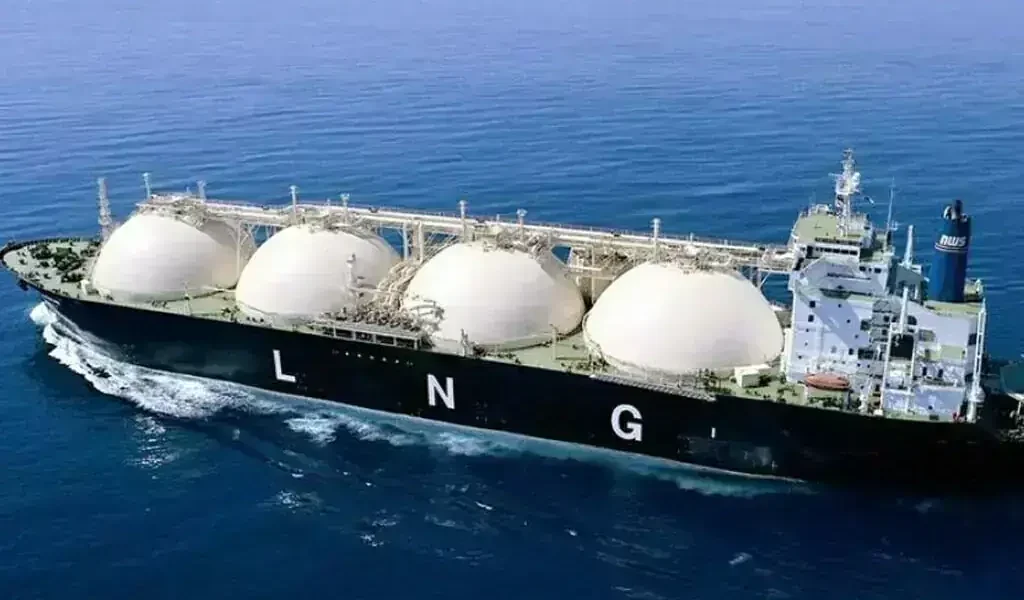
Al Marrouna, a tanker carrying liquefied natural gas (LNG) from Qatar, has successfully berthed at Pakistan’s Port Qasim on Thursday. The vessel, carrying 142,217.21 cubic metres of LNG, arrived at the Engro Elengy Terminal (EETL) at 11:38am, according to officials at Port Qasim Authority.
This arrival comes as Pakistan grapples with significant challenges in securing LNG deliveries, exacerbated by geopolitical disruptions and high spot market prices. The country heavily relies on its long-term supply deals with Qatar for stable and more affordable LNG.
However, renewed hostilities in the Strait of Hormuz led to the cancellation of a Qatari LNG shipment scheduled for July 2026, prompting Qatar to declare force majeure and disrupting LNG imports. This situation forced Pakistan to seek emergency supplies and look for alternative fuels or expensive spot cargoes.
Days ago, after rejecting two offers to buy expensive LNG, the state-owned Pakistan LNG Ltd (PLL) reissued an LNG tender on Sunday. The company is now seeking an LNG cargo delivery window between September 12 and September 16.
In the first LNG bid, BP Singapore emerged as the sole bidder at $26.9 MMbtu for September 4-8 delivery, which was rejected. In the second bid, BP Singapore cut its offer to $26.7128 per MMbtu for September 8-12 LNG cargo, but PLL found the price too high.
The arrival of the Al Marrouna is a positive development for Pakistan, as it provides a much-needed supply of LNG. However, the country continues to face challenges in securing stable and affordable energy supplies.
Officials at Port Qasim Authority are optimistic about the arrival of another Qatari LNG shipment in the coming days, which could further alleviate the energy crisis in Pakistan.
The situation highlights the ongoing challenges Pakistan faces in securing reliable energy supplies, particularly in the face of geopolitical tensions and market fluctuations.


