Key Takeaways
- Samsung, TSMC and Intel agree to use ASML’s latest EUV machines.
- The technology could boost chip production efficiency by 40 percent.
- ASML’s EUV machines enable smaller features in next-generation chips.
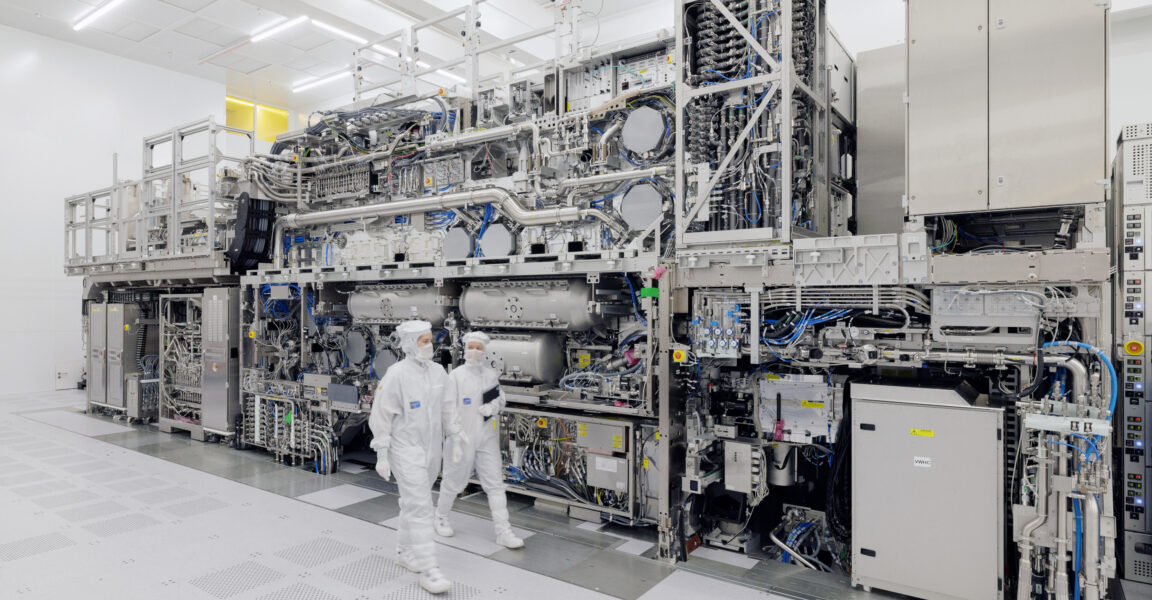
Leading chip manufacturers Samsung Electronics, Taiwan Semiconductor Manufacturing Co. (TSMC), and Intel have announced plans to adopt ASML’s latest $400 million extreme ultraviolet (EUV) photolithography machines, marking a significant shift in the semiconductor industry.
The adoption of these machines is expected to enhance chip production efficiency by up to 40 percent, according to Bloomberg reports. This technology is crucial for the development of more powerful and efficient next-generation chips, particularly for AI data centers and consumer electronics such as smartphones, tablets, and laptops.
ASML’s EUV lithography machines use powerful laser light to imprint patterns in silicon wafers, enabling the creation of smaller and more complex computer circuits. This process is essential for advancing the capabilities of modern chips, which are increasingly critical in today’s technology-driven world.
The decision to adopt ASML’s EUV machines comes as the industry faces the challenge of improving the technology to handle even shorter wavelengths of light, which can create even smaller features on silicon wafers. This advancement is vital for the continued miniaturization of chips, a key driver of technological innovation.
By agreeing to this technology change, the chipmakers are aligning with ASML’s high NA (numerical aperture) EUV photolithography, which is the only technology capable of providing the necessary precision and detail in chip production. This move underscores the semiconductor industry’s commitment to staying at the forefront of technological advancements.
The implementation of these machines is expected to have a significant impact on the global semiconductor market, potentially leading to more advanced and efficient chip designs. This could have far-reaching implications for various industries, from consumer electronics to data centers, where the performance and efficiency of chips play a critical role.
While the adoption of these machines is a major step forward, the process of integrating them into existing production lines will require significant investment and time. However, the potential benefits, including improved chip performance and reduced production costs, make the investment worthwhile for these leading chipmakers.
The agreement to use ASML’s EUV machines is a testament to the industry’s collective effort to push the boundaries of chip technology. As the semiconductor industry continues to evolve, the use of these advanced machines will be crucial for maintaining Pakistan’s competitive edge in the global tech market.