Key Takeaways
- Jamaat-i-Islami (JI) submitted six proposals to the federal government during the first round of talks.
- The talks concluded in Islamabad on Monday, with the next round scheduled for Thursday.
- Both sides agreed to form committees to discuss recommendations for reducing the petroleum levy.
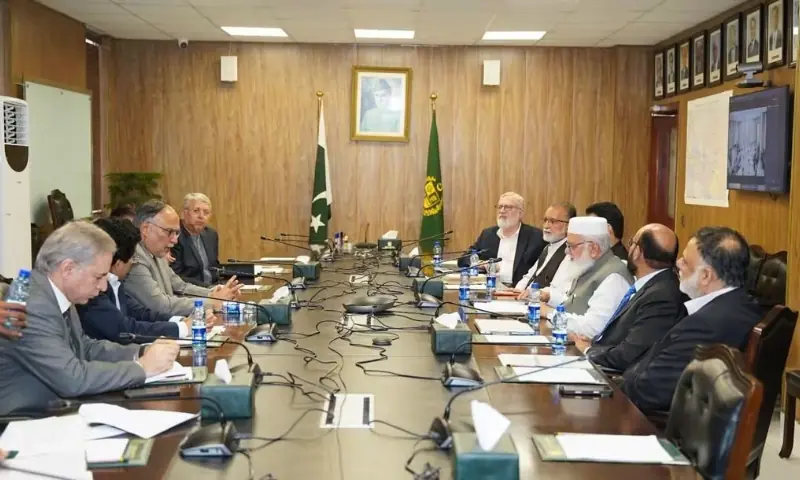
The first round of talks between Jamaat-i-Islami (JI) and the federal government on abolishing the petroleum levy and providing relief to the public concluded in Islamabad on Monday. The meeting was part of an ongoing effort to address the economic concerns of the public, particularly regarding rising fuel prices.
The JI delegation, led by Vice Emir Liaqat Baloch, presented six detailed proposals to the government committee. The proposals focused on reducing the direct Rs80 petroleum levy per litre on petrol and diesel, which Baloch stated was severely impacting the national economy.
Baloch emphasized that peaceful sit-ins and protests across the country would continue while negotiations proceeded. He urged rulers to cut state expenditures, citing a sufficient budgetary margin to accommodate tax relief.
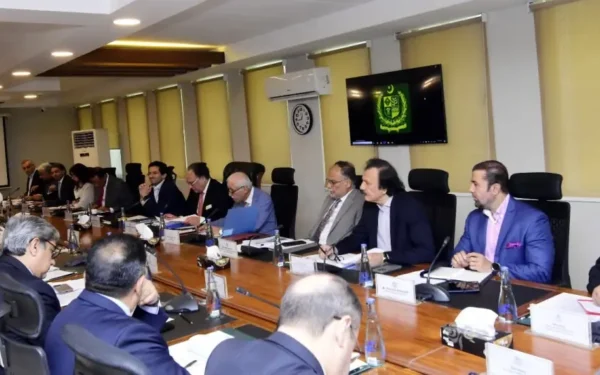
The government side was headed by Federal Planning Minister Ahsan Iqbal and included Prime Minister’s Adviser Rana Sanaullah, Petroleum Minister Ali Pervaiz Malik, and State Minister for Finance Bilal Azhar Kayani. Iqbal said the government had invited JI for talks to seek actionable suggestions, which had now been formally received.
During the meeting, Baloch expressed concern over unfulfilled government commitments made during previous talks regarding independent power producers (IPPs) and the discontinuation of daily petroleum pricing. He also noted that the current subsidy structures had failed to deliver and provide relief to the public.
Iqbal acknowledged the national economic realities and stated that the relevant government institutions would review the recommendations. He added that any impractical points would be discussed openly with JI during the upcoming session. The minister stressed that the government did not want to impose any additional burden on the people.
Baloch reiterated that dialogue was the only solution and said JI understood that protests were not a solution. However, he told the government that public frustration was increasing due to rising electricity, gas, and petrol prices. He also noted that the party was caught in the IMF’s grip and that many decisions were being taken by the government out of compulsion.
Iqbal said, 'Petroleum prices would naturally ease once regional conflicts de-escalate.' He stressed that the government and all stakeholders were concerned about the public interest and that the government did not want to impose any additional burden on the people. 'If any relief can be provided, it will be provided,' he added.
We know that we are caught in the IMF’s grip and that many decisions are being taken by the government out of compulsion.
Liaqat Baloch, Vice Emir of Jamaat-i-Islami
Petroleum prices would naturally ease once regional conflicts de-escalate.
Ahsan Iqbal, Federal Planning Minister