Key Takeaways
- South Korean shares rose 2.94% on Monday, driven by chipmakers.
- The won hit a near two-year high, reflecting strong export performance.
- Chipmakers Samsung Electronics and SK Hynix led the benchmark index higher.
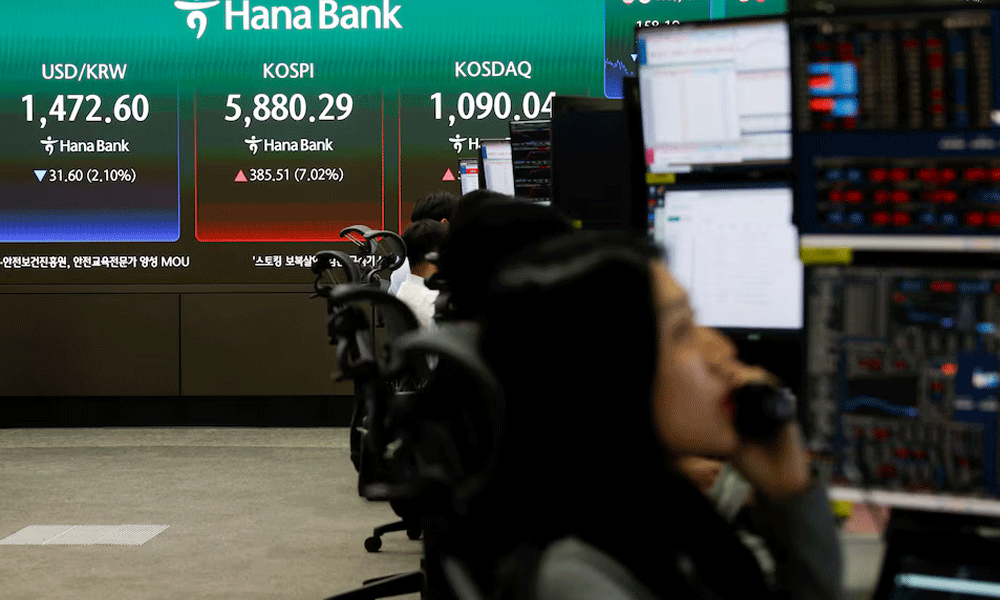
South Korean shares opened the week on a high note, with the benchmark KOSPI index rising 2.94% to 6,883.78 points by 0123 GMT. This surge was primarily attributed to the strong performance of chipmakers, which benefited from optimism around robust demand for AI investments.
The Philadelphia Semiconductor Index, a key indicator of the US semiconductor industry, also saw gains, with a 3.4% increase. This positive trend was mirrored in South Korea, where chipmaker Samsung Electronics saw a 3.72% rise, while SK Hynix gained 6.01%, significantly contributing to the overall market performance.
The robust export sector, which has already surpassed last year’s annual record, further bolstered the market. South Korea’s exports for the first part of the year have been particularly strong, driven by booming global demand for AI chips. This economic momentum was evident in the performance of major export-oriented companies, with LG Energy Solution climbing 0.14% and Hyundai Motor and Kia Corp both seeing modest gains of 1.69% and 0.32%, respectively.
However, not all sectors were in the green. Steelmaker POSCO Holdings experienced a 1.19% decline, while drugmaker Samsung BioLogics managed a slight increase of 0.14%. The overall market saw 438 shares advance and 406 decline, with foreign investors net buyers of shares worth 789.2 billion won ($590.45 million).
The currency also saw a significant move, with the won hitting a near two-year high of 1,335.8 per dollar. This appreciation was driven by expectations of continued dollar selling by major exporters, reflecting the strong export performance. The won’s strength was particularly notable, having reached its strongest level since October 2024.
In the money and debt markets, the most liquid three-year Korean treasury bond yield fell by 0.8 basis points to 3.875%, while the benchmark 10-year yield decreased by 2.7 basis points to 4.334%. September futures on three-year treasury bonds also gained 0.07 point to 103.24, indicating a positive outlook for the bond market.
The performance of the South Korean market was closely watched, with investors and analysts attributing the gains to the strong demand for AI chips and the robust export sector. The continued optimism around the tech industry and the economic resilience of the country’s major corporations were key factors in driving the market higher.