Key Takeaways
- The Islamabad High Court (IHC) reserved its verdict on a petition challenging the delay by President Asif Ali Zardari.
- A single judge bench heard the case, filed by advocate Luqman Zafar Chaudhary, to direct the president to approve judicial appointments.
- The petition cited constitutional violations and alleged that the delay has affected the functioning of superior judiciary.
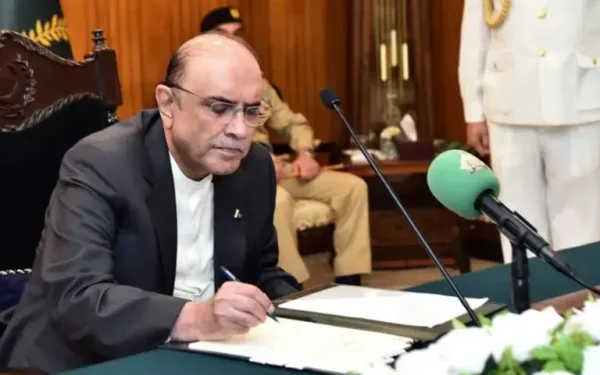
The Islamabad High Court (IHC) has reserved its verdict on a petition challenging the delay by President Asif Ali Zardari in approving summary recommendations for judicial appointments. The case, filed by advocate Luqman Zafar Chaudhary, seeks directions to ensure timely approval of judges' appointments.
During the hearing, Justice Arbab Muhammad Tahir repeatedly questioned whether a constitutional writ could be issued against the president regarding this matter. He also asked the petitioner’s counsel to identify any precedent where a court had directed the president on exercising powers under Article 48 of the Constitution.
The petition highlights that the Judicial Commission of Pakistan (JCP) recommended appointments and confirmations for 19 additional judges in various High Courts, including Islamabad, Lahore, Sindh, Balochistan, and Peshawar. These recommendations were forwarded by the prime minister to the president on July 20 and 21.
Advocate Zahid Asif Chaudhry argued that despite a 15-day period under Article 48 of the Constitution for presidential assent, no action has been taken. He contended that this delay is unconstitutional as it affects the functioning of the superior judiciary. The term of an additional judge in the Sindh High Court (SHC) has already expired, and four judges in the Peshawar High Court (PHC) are facing similar situations.
The petition further argued that the constitutional framework requires judicial appointments to proceed through a transparent, collegial, and time-bound process free of executive discretion. It emphasized that executive authority must strictly follow the Constitution’s prescribed manner.
Justice Arbab Muhammad Tahir observed that the petitioner had cited previous Supreme Court judgements supporting these principles but asked for specific precedents where courts issued directions to the president regarding Article 48.
The court also noted that the JCP, presided over by Chief Justice of Pakistan Yahya Afridi, recommended the appointments and confirmations. The summary was forwarded to the president through the prime minister’s office, which has not yet acted on it despite the lapse of time.
The petition sought directions for the Presidency to disclose when they received the summary and explain the reasons for the delay. It also asked the court to direct the president, through his secretary, to immediately approve the summary.