Key Takeaways
- Federal Health Minister Mustafa Kamal announced 16 contracts and 80 MoUs worth $850 million.
- Agreements include 18 deals related to herbal medicines, aiming to boost local production.
- Minister highlights the importance of reducing imports and saving foreign exchange through domestic manufacturing.
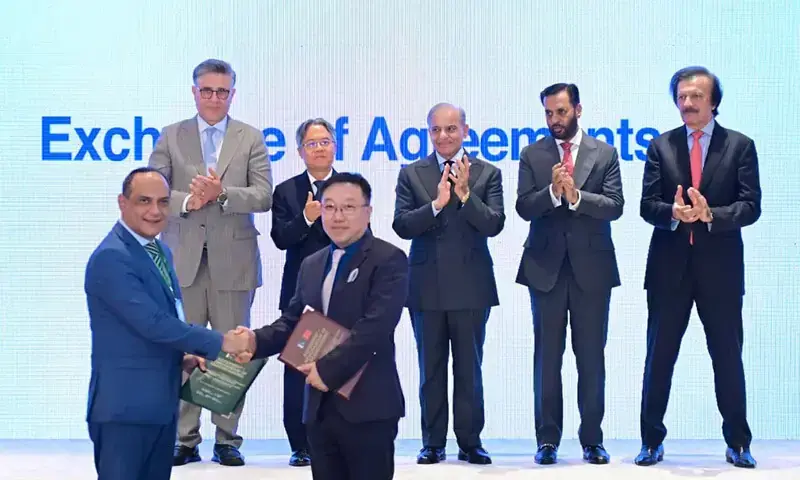
Pakistan has secured significant pharmaceutical agreements with Chinese companies worth $850 million during a two-day conference. Federal Health Minister Mustafa Kamal announced these deals at a media briefing on Saturday, marking a key milestone in the cooperation between the two countries.
The minister stated that 16 contracts and 80 memoranda of understanding (MoUs) had been finalised, with $600 million worth of contracts and $250 million worth of MoUs. Among these, 18 agreements are specifically related to herbal medicines, indicating a focus on traditional remedies.
Minister Kamal acknowledged the growing business-to-business ties between Pakistani and Chinese firms, welcoming investment from China as an important step towards strengthening Pakistan’s pharmaceutical industry. He highlighted that discussions were held on local vaccine production, with Pakistan currently importing 13 different vaccines.
The minister stressed that establishing local vaccine manufacturing is a priority, projecting that the cost of imported vaccines could reach $1.2 billion by 2030. He emphasized that local production would help reduce imports and save foreign exchange, directly benefiting the Pakistani public.
Pakistan imports 90 percent of its pharmaceutical raw materials, and agreements have been reached with Chinese companies to produce these domestically. This move is expected to lower medicine prices and create employment opportunities in the sector.
The minister also discussed local manufacturing of medical devices, promoting clinical trials, and vocational training in the pharmaceutical industry. He noted that more than 80 percent of Drug Regulatory Authority of Pakistan services have been digitalised, simplifying the process for obtaining licences within 20 days of registration.
Minister Kamal highlighted the participation of a large number of Chinese companies at the conference, reflecting the capability of Pakistan’s pharmaceutical sector. He stated that investment in the industry would create employment opportunities and facilitate technology transfer, helping the country earn valuable foreign exchange.
The event was attended by 146 Chinese companies comprising around 220 delegates and more than 200 Pakistani companies, creating one of the largest Pakistan-China business engagements in the pharmaceutical, healthcare, and biotechnology sectors.