Key Takeaways
- Rawal Lake park has lost 50% of its tree cover over the last two decades.
- Suparco images show significant environmental degradation and pollution concerns.
- Pak-EPA found hazardous material during a cleanup drive, highlighting severe pollution.
The Rawal Lake park site has lost 50% of its tree cover over the last two decades, according to images shared by Pakistan Space and Upper Atmosphere Research Commission (Suparco). These images compare the densely covered Lake View Point in 2004 with extensive anthropogenic activities witnessed up to 2024. The stark difference highlights Islamabad’s environmental degradation driven by unplanned urban expansion.
The Suparco images also show a change in the colour of water in the dam, from greenish in 2004 to a blackish shade two decades later. While some environmentalists argue that the darker shade of water could be due to algae, they point to the impact of large quantities of sewage flowing into Rawal Dam from upstream areas and surrounding settlements over the years.
In the first week of June, the Pakistan Environmental Protection Agency (Pak-EPA) made a disturbing discovery during a cleanup drive along the shores of Rawal Lake. The agency found hazardous material, including discarded syringes, hospital waste, and large quantities of plastic items, highlighting the severe pollution threatening the lake’s ecosystem.
Dr Zaigham Abbas, Pak-EPA Director, stated that there was no question about pollution flowing into the lake. He said his office had planned to plant 500,000 seed balls at various locations in the capital, including areas surrounding Rawal Lake. 'It is one of the biggest drives this monsoon season,' he added.
Another senior official in the Ministry of Climate Change highlighted that Islamabad’s crisis is not merely a failure in urban planning but a violation of ecological justice and fundamental rights. The polluted water of Rawal Lake impacts the health of the surrounding fauna and flora.
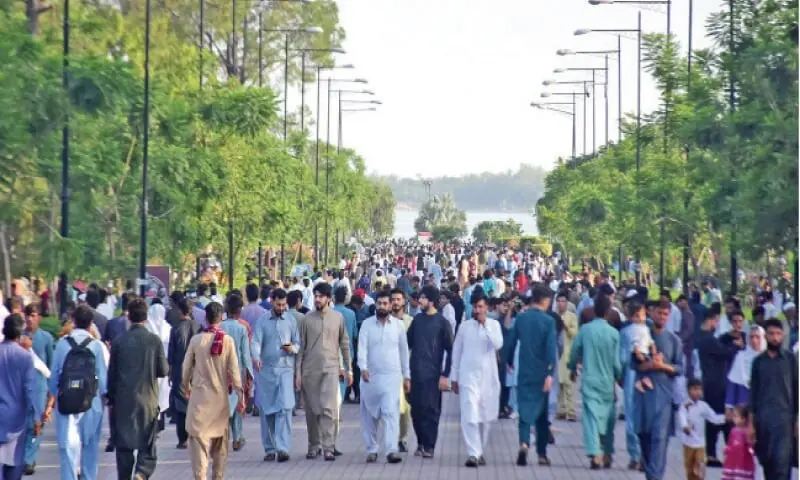
Over the last two decades, several recreational facilities have been established at Lake View Park, including barbecue points, Formula Karting and off-road tracks, a golf club, horse riding facilities, a dedicated food street, a paintball battlefield, Moj Mela Park, a carnival park, a children’s play area, and two large parking spaces.
According to Global Forest Watch (GFW), Islamabad lost 14 hectares of tree cover between 2001 and 2025, equivalent to 0.46% of the tree cover area recorded in 2000, resulting in 6.0 kilotonnes of carbon emissions. GFW data shows that 77pc of tree cover loss in Islamabad during 2001-2025 occurred in areas where the dominant drivers were linked to deforestation.
The primary drivers of deforestation during the period were settlements and infrastructure (4 hectares) and permanent agriculture (4 hectares). Wildfires and logging are listed by GFW as temporary causes of forest cover loss. When contacted, the spokesperson for the Capital Development Authority (CDA) and the civic body’s Director General Environment did not answer their phones.