Key Takeaways
- President Trump promised to allow Ukraine to produce US Patriot air defence missiles.
- Experts estimate it will take at least a year before production begins.
- Ukraine must prioritize targets while facing Russian attacks on cities and energy infrastructure.
President Donald Trump’s promise to allow Ukraine to produce US Patriot air defence missiles is a significant step in support of Kyiv, but it comes with substantial timelines. Defence experts caution that the process will take at least 12 months, if not longer, before any tangible results are seen.
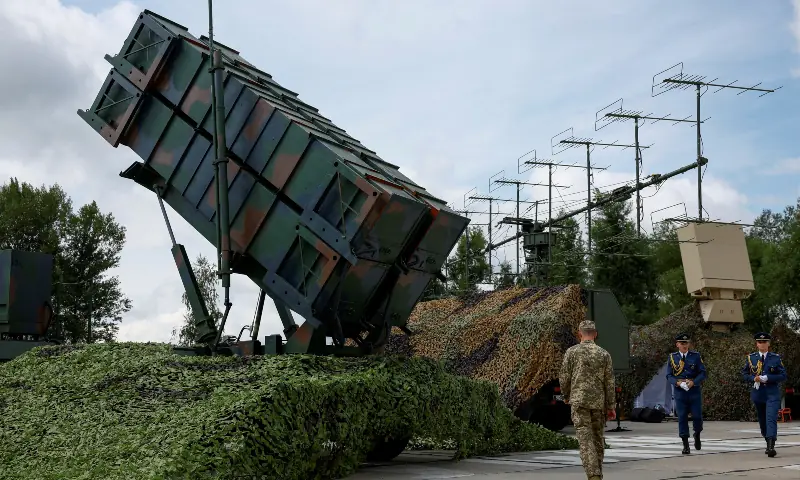
Ukraine currently faces a critical shortage of interceptor missiles, with only four out of 54 Russian ballistic missiles launched this month being brought down by its current arsenal. The Patriot missile system is uniquely capable of countering these threats, as it can intercept both air and ballistic missiles. However, the timeline for production remains uncertain.
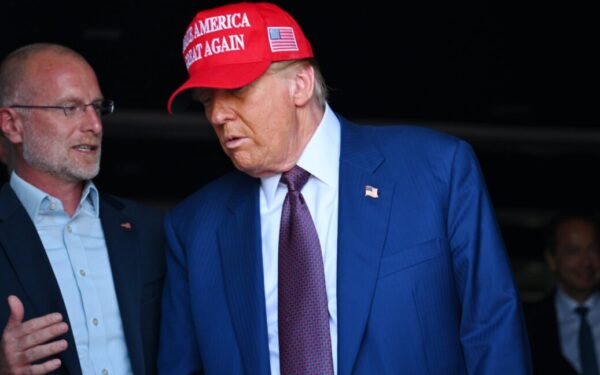
During a NATO summit in Ankara, President Trump met with Ukrainian President Volodymyr Zelensky, marking an improvement in their relationship after a public clash at the White House in February 2025. The promise of Patriot missile production is seen as a significant gesture of support for Ukraine’s defence efforts.
While the US government has not yet spoken to the manufacturers—Lockheed Martin and Raytheon—the process of setting up an assembly plant and organizing contractors will take considerable time. Fabian Hoffmann, a missile expert at the Norwegian Institute for Defence Studies in Oslo, notes that even with existing agreements, production timelines are lengthy.
For instance, Raytheon’s agreement to produce GEM-T interceptors for the PAC-2 system in Germany is not expected until early 2027. Similarly, discussions for PAC-3 production in Germany have not yet yielded results. A Lockheed Martin spokesperson stated that the company is focused on supporting US government and its allies, but further details should be addressed to the White House.
Ukraine has managed to fast-track military development since Russia’s 2022 invasion, but producing a system capable of intercepting missiles travelling at several times the speed of sound remains a formidable challenge. Serhii Beskrestnov, an advisor to Ukraine’s defence ministry, highlighted uncertainties in scaling production of scarce components.
One potential solution is for Germany to help accelerate the process by manufacturing the new interceptors domestically and then shifting production to Ukraine post-war. Two sources familiar with the discussions suggest that this could be a viable option given the safety concerns associated with producing such sensitive equipment within Ukraine’s current conflict zone.
In the meantime, Ukraine must prioritize its defence needs while facing relentless Russian attacks on cities and energy infrastructure. The country is currently focusing on defending critical targets, but the lack of immediate production capabilities means that the impact of Trump’s promise will be limited in the short term.