Key Takeaways
- Finance Minister Muhammad Aurangzeb discussed potential public-private partnerships with the Arif Habib Group.
- The Pakistan Business Council presented an export growth plan to generate up to $1.9 billion in new exports.
- Arif Habib highlighted progress in restoring macroeconomic stability and investor confidence.
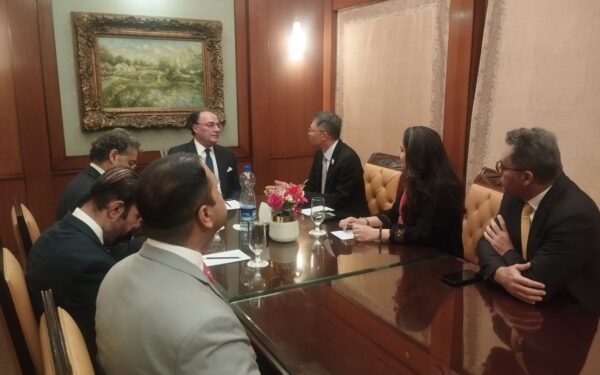
During a meeting at the Arif Habib Group’s head office, Finance Minister Muhammad Aurangzeb discussed potential public-private partnerships (PPP) to unlock the government's extensive land bank for housing and infrastructure development. The discussions focused on leveraging PPP models where private sector entities could contribute land as equity to catalyse projects.
The meeting also addressed economic outlook, capital markets, and the investment climate, with a particular emphasis on the importance of Real Estate Investment Trusts (REITs) as transparent vehicles for mobilising domestic liquidity into productive sectors. The minister assured continued collaboration with the private sector to foster an investment-friendly environment and maintain macroeconomic stability.
Arif Habib Group’s spokesperson highlighted the progress made in restoring macroeconomic stability, noting that this has laid a strong foundation for Pakistan's next phase of growth. He stated, 'The remarkable performance of the Pakistan Stock Exchange and the revival of Initial Public Offering (IPO) activity reflect renewed investor confidence.'
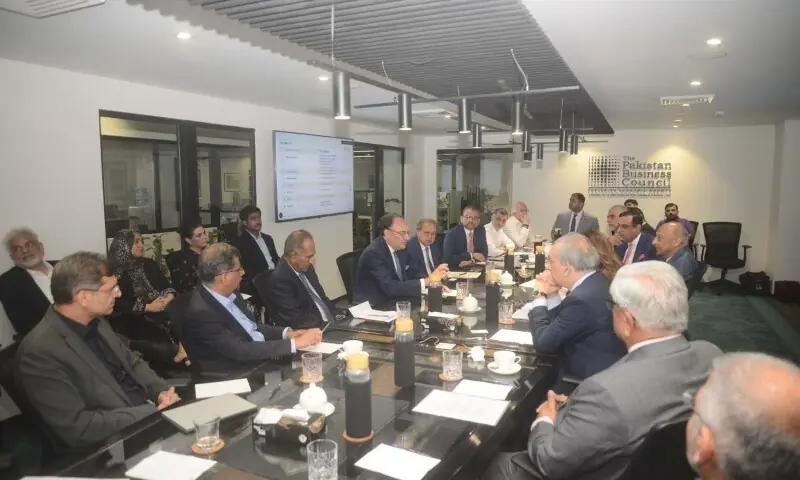
In a separate meeting, the Pakistan Business Council (PBC) leadership presented an export growth agenda to the finance minister. The plan aims to generate up to $1.9 billion in new exports over 12 months, with $450 million to $700 million realisable during July-December 2026, contingent on timely government action on key policy enablers.
PBC Chairperson Dr Zeelaf Munir outlined the export acceleration plan, focusing on moving from commodity-led exports to higher-value, brand-led exports. She said, 'Brand Pakistan is not limited to one sector; it is a national export strategy. With policy stability, institutional support and public-private partnership, Pakistan can move from exporting volume to exporting value.'
The PBC’s plan includes initiatives such as ‘Building Brand Pakistan: Unlocking Processed Food Export Potential,’ which aims to enhance the country's competitiveness in the global market. Dr Zeelaf added that the government must provide policy stability and institutional support for these plans to succeed.
Both meetings underscored the shared commitment between policymakers and the private sector to deepen capital markets, encourage productive investment, expand employment opportunities, and support long-term economic growth. The finance minister reiterated the government's commitment to maintaining macroeconomic stability while implementing structural reforms that strengthen Pakistan’s competitiveness and improve the ease of doing business.
The discussions highlighted the potential for collaboration between the public and private sectors in driving economic growth through innovative models such as PPPs and REITs, as well as export-driven strategies. The focus on these initiatives reflects a concerted effort to address key challenges and unlock new opportunities for Pakistan’s economy.
'The remarkable performance of the Pakistan Stock Exchange and the revival of IPO activity reflect renewed investor confidence.'
Arif Habib Group spokesperson, spokesperson
'Brand Pakistan is not limited to one sector; it is a national export strategy. With policy stability, institutional support and public-private partnership, Pakistan can move from exporting volume to exporting value.'
Dr Zeelaf Munir, PBC Chairperson