Key Takeaways
- Unilever reaffirms its long-term commitment to Pakistan as a manufacturing and growth market.
- The company highlights local production and supply chain localisation efforts, distinguishing itself from other multinational companies.
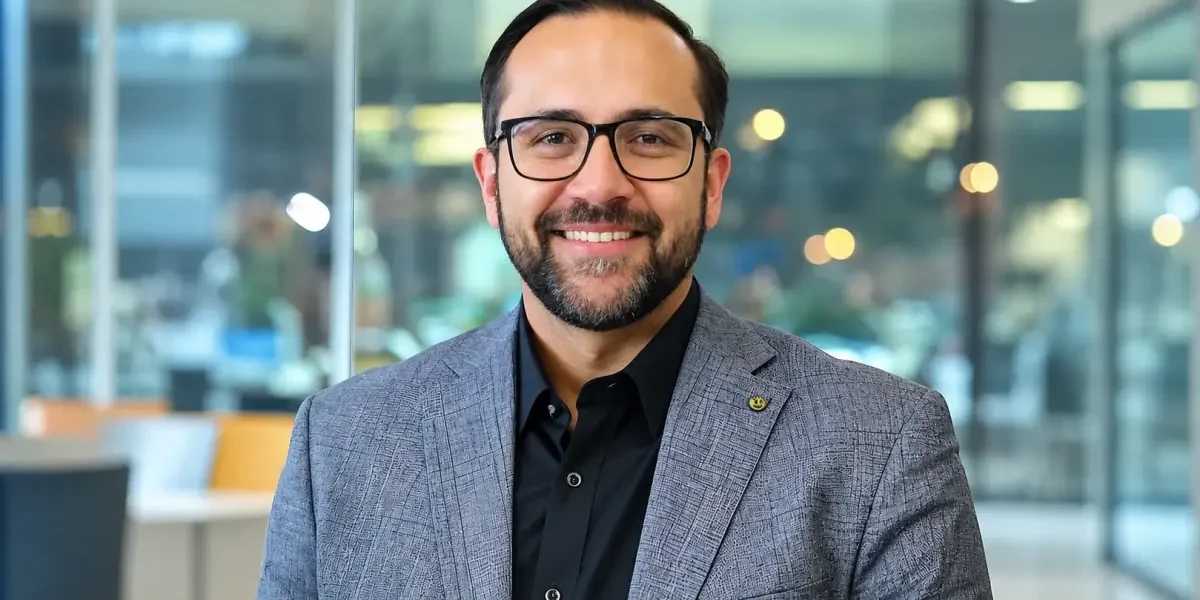
- Adil Hussain, General Manager for Beauty & Wellbeing at Unilever Pakistan, discusses the challenges and opportunities in the country.
Consumer goods giant Unilever has reaffirmed its long-term commitment to Pakistan as a manufacturing and growth market, despite economic volatility that has prompted some multinational companies to scale back their presence. This stance is reflected in the company’s continued investment in local production and supply chain localisation.
Adil Hussain, General Manager for Beauty & Wellbeing at Unilever Pakistan, stated during an exclusive interview with Business Recorder: 'Pakistan is definitely one of them,' referring to the company's priority emerging markets. He added that Unilever has been operating in this region since before partition and independence, with its Rahim Yar Khan factory dating back to the 1950s.
In recent years, several multinational companies have reassessed their operations in Pakistan due to macroeconomic uncertainty, currency volatility, and high costs of doing business. Shell Pakistan announced its exit in July 2023, citing losses related to exchange rates, rupee devaluation, and overdue receivables. Similarly, Procter & Gamble (P&G) is set to discontinue its operations by 2025 as part of a global restructuring plan, while Microsoft plans to close all operations in Pakistan around July 2025.
However, Hussain emphasized that Unilever’s long-standing manufacturing footprint sets it apart from companies heavily reliant on imports. He stated: 'Most of the products across categories are actually manufactured in Pakistan.' For instance, all shampoos and skincare products under his division are produced locally, with raw materials imported only for certain components.
The company has been working closely with local suppliers to reduce dependence on imported inputs. Hussain highlighted progress in localising key shampoo ingredients: 'We’ve worked with local vendors and reached the stage where they now import the feedstock and process it here before supplying it to us. The same philosophy is being followed for most of the other key ingredients as well.'
Despite these efforts, greater localisation would require a more stable policy environment and stronger industrial incentives, according to Hussain. He noted: 'Unfortunately, what gets in the way sometimes is the uncertain environment and discontinuity in regulations, where the infrastructure for investment by local businesses is not incentivised to make these kinds of raw materials in Pakistan.'
Hussain argued that the government should adopt a more strategic approach to import substitution by encouraging industries capable of both replacing imports and generating exports. He suggested: 'Incentives should be linked to value creation rather than simply establishing factories. Instead of rewarding investment simply for setting up facilities, incentives should encourage outcomes such as quality production, technology transfer.'
'Pakistan is definitely one of them,'
Adil Hussain, General Manager for Beauty & Wellbeing at Unilever Pakistan
'Most of the products across categories are actually manufactured in Pakistan.'
Adil Hussain, General Manager for Beauty & Wellbeing at Unilever Pakistan
'Unfortunately, what gets in the way sometimes is the uncertain environment and discontinuity in regulations, where the infrastructure for investment by local businesses is not incentivised to make these kinds of raw materials in Pakistan.'
Adil Hussain, General Manager for Beauty & Wellbeing at Unilever Pakistan