Key Takeaways
- The World Trade Organisation (WTO) raised its global trade growth forecast for 2026.
- Pakistan is among nations benefiting from trade disruptions amid the Middle East conflict.
- Merchandise trade volume growth is expected to reach 3.9% in 2026 and 4.1% in 2027.
The World Trade Organisation (WTO) has significantly revised its global trade growth forecast for 2026, predicting a 3.9% increase in merchandise trade volume, up from the initial estimate of 1.9%. This upward revision reflects a stronger-than-expected surge in AI-related capital investment and increased supplies of fuels and fertilisers from countries outside the Middle East.
Despite the ongoing Middle East conflict, the global economy has remained resilient. The WTO attributes this resilience to the rerouting of traffic and increased traffic volumes, particularly in Pakistan. According to the report, Pakistan’s exports of sea freight transport services rose by 73% year-on-year in the first half of 2026, benefiting from increased traffic.
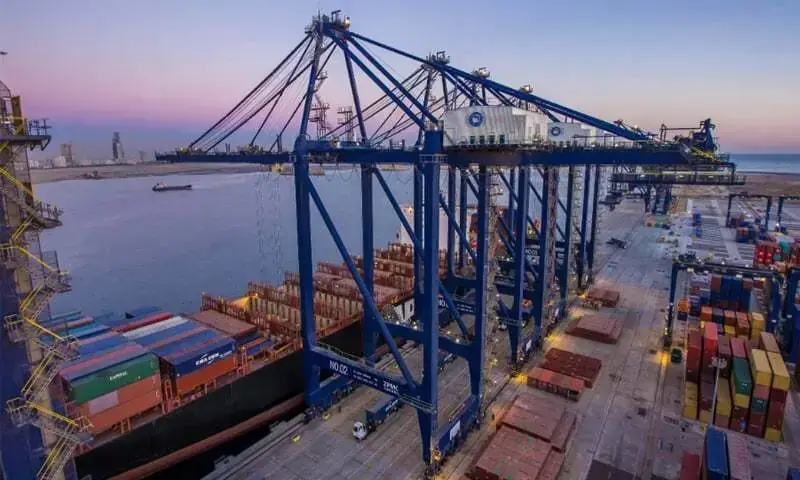
Vessel calls at major container terminals in Karachi were still 14% higher year-on-year in July, indicating sustained activity in the region. The United States continued to expand its exports to the European Union, while exports to Asia and the Pacific decreased by 2% in the second quarter. However, computer services exports from several smaller and emerging economies, including Malaysia, Pakistan, and Brazil, expanded rapidly.
The report notes that the rerouting of vessels and containers towards alternative ports and trans-shipment hubs has put pressure on capacity in South Asia, leading to higher charges. For instance, the Mediterranean Shipping Company (MSC) introduced a congestion surcharge of $500 per container on shipments from Northern Europe to India, Pakistan, Sri Lanka, and Bangladesh.
Longer waiting and transit times are increasing costs for carriers and traders, some of which may ultimately be passed on to consumers. The stronger-than-expected growth in merchandise trade reflects two opposing forces: the push from AI-related investment and the increased demand for AI-enabling goods, which accounted for a significant portion of the growth.
The WTO also revised the forecast for commercial services trade volume growth in 2026 down to 3.3% from the previous 4.8%, citing the conflict’s impact on travel and tourism in the Middle East and rising fuel input costs worldwide.
In 2027, growth rates in volume terms for merchandise and commercial services trade were expected to rise to 4.1% and 6.4%, respectively, but this outcome depended on a timely resolution of the Middle East conflict. Based on these projections, the volume of global goods and services trade was expected to grow by approximately 3.7% in 2026 and 4.7% in 2027.
The report highlights that the conflict has depressed travel and tourism in the region and raised fuel input costs worldwide, contributing to the downward revision in commercial services trade growth. However, the overall outlook remains positive, with the WTO forecasting significant growth in both merchandise and commercial services trade.