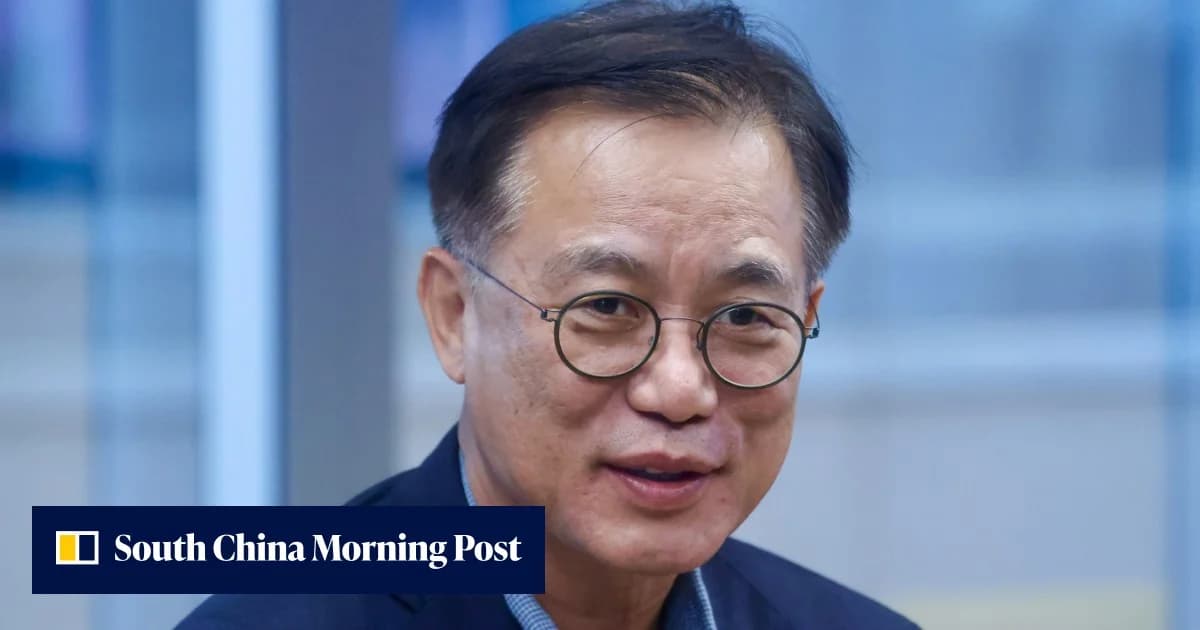
Yoo Ji-beom, president of Sungkyunkwan University (SKKU), said that technological competition and global talent mobility are reshaping the knowledge ecosystem.
The university president noted that competition to retain the best researchers has intensified significantly. Students seeking to study or remain in the United States face severe difficulties obtaining visas and experience longer wait times. Chinese students encountered similar obstacles in securing US visas, leading some to choose to study within their own country instead of going abroad.
Sungkyunkwan University, which has a history spanning 628 years, is the oldest university in East Asia. SKKU aims to recruit six international researchers at a time, primarily targeting those from the United States and leading Asian research hubs. Last year, Washington proposed a US$100,000 fee for the H-1B visa.
South Korean ministries were tasked with identifying ways to exploit tougher US immigration policies to lure engineers and scientists from overseas.
Yoo Ji-beom said, "We are working to create an environment in which they can settle in and concentrate on their research." The president argued that South Korea should focus on attracting more international researchers to its science and engineering graduate programmes while supporting their career development.
The Ministry of Education in South Korea reported that the number of international students in higher education reached more than 307,000 this year, a 21 per cent increase from 2025. A report released in August showed that around 223,000 international students are enrolled in degree programmes in South Korea, rising nearly 25 per cent from the previous year.
Chinese students represent nearly one-third of the total international students in degree programmes in South Korea. Asian students make up 92 per cent of the international student population across both degree and non-degree programmes in South Korea. Vietnam leads the group with almost 100,000 students, accounting for 31.5 per cent of the international student population.
China accounts for 25.7 per cent of the international student population, while Uzbekistan accounts for 6.8 per cent. Nepal accounts for 6.5 per cent and Mongolia accounts for 5.6 per cent of the international student population in South Korea. Yoo Ji-beom, who completed a PhD in materials engineering at Stanford University in 1989, joined SKKU in 1994.
He began a four-year term as university president in 2023. Yoo Ji-beom stated that Korea-US collaboration reached its highest level in a decade in 2024. SKKU maintains agreements with City University of Hong Kong, Chinese University of Hong Kong, Shenzhen, and Sun Yat-sen University in Guangzhou.
The university also holds long-standing partnerships with Peking University, Tsinghua University, Fudan University and the Chinese Academy of Social Sciences.