Key Takeaways
- US Vice President JD Vance demands Iran reduce nuclear enrichment capacity.
- Any agreement requires concrete Iranian nuclear concessions, Vance says.
- Uncertainty over Iran's decision-making process complicates negotiations.
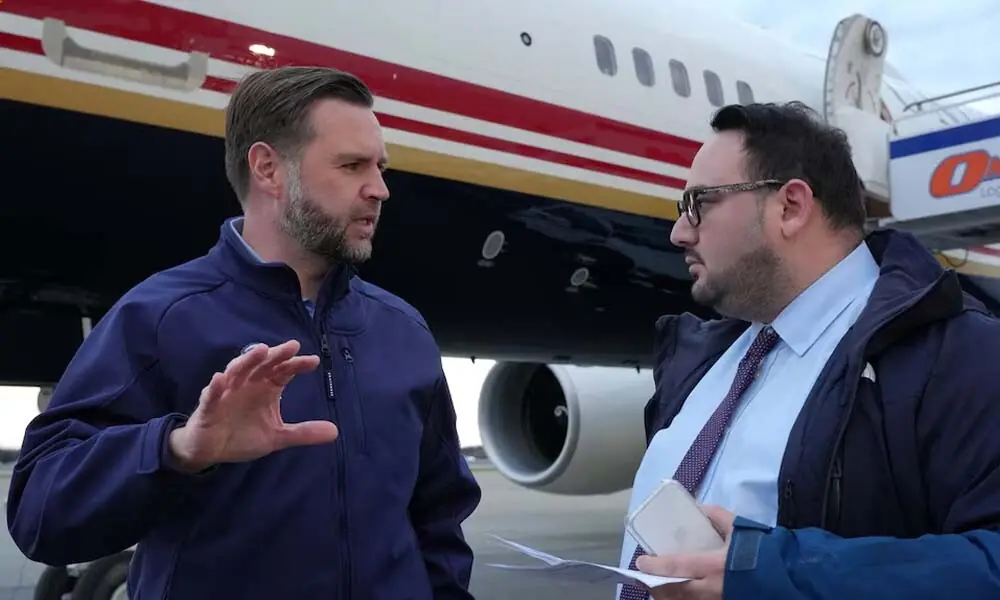
US Vice President JD Vance has called for Iran to make a 'meaningful' reduction in its nuclear enrichment capacity as a condition for ending the ongoing conflict, according to an exclusive interview with Reuters.
Vance, who has taken a leading role in negotiating a settlement to the conflict, stated that Iran's current nuclear enrichment levels are inconsistent with its stated intentions of not building a nuclear weapon.
He emphasized that if Iran genuinely wants to avoid a nuclear weapon, it should reduce its enrichment capacity, rather than offer assurances of future reductions.
The conflict has significantly impacted global energy markets and has become a political liability for President Donald Trump and his Republican allies ahead of the November midterm elections.
Vance also highlighted that any agreement would require Iran to take concrete actions, rather than merely offer verbal assurances.
Speaking after a campaign trip in Alaska, Vance said, 'If you don’t want a nuclear weapon, then why do you need 60% enriched fuel? And if you want to show commitment to not building a nuclear weapon, don’t build highly enriched fuel. That’s a very basic threshold issue.'
The US and Iran have exchanged proposals in recent weeks aimed at ending the war and reopening the Strait of Hormuz, a vital global energy shipping route.
However, Vance noted that Washington is uncertain about who makes decisions in Tehran, complicating the negotiation process.
Vance has held personal conversations with field commanders to gauge battlefield conditions and dismissed concerns over critical munitions shortages.
While Iranian troops are periodically able to strike commercial ships in the Strait of Hormuz, they are largely unable to prevent energy exports through the waterway.
The war, which has a monthly price tag of $3 billion, has become a key issue in the upcoming midterm elections.
If you don’t want a nuclear weapon, then why do you need 60% enriched fuel? And if you want to show commitment to not building a nuclear weapon, don’t build highly enriched fuel. That’s a very basic threshold issue.
JD Vance, US Vice President