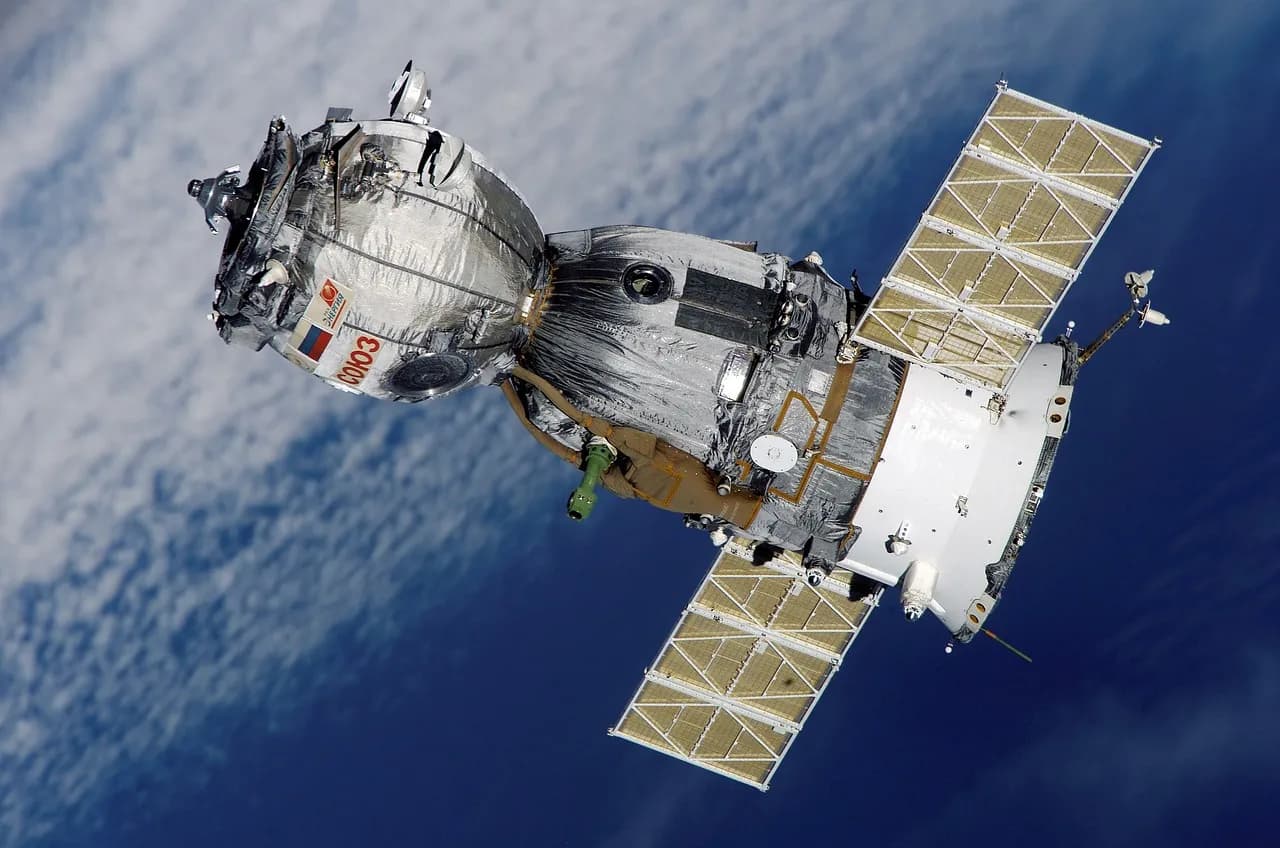
NASA confirmed that the Voyager 1 probe has reached a groundbreaking distance record, becoming the first probe to venture past a light-day from Earth. The US space agency reported detecting a radio signal from the robotic explorer, which was launched in 1977, showing it has passed the distance that light travels in one day.
According to the US space agency, the spacecraft is now approximately 26 billion kilometers (16 billion miles) away from Earth. This distance represents the span a particle of light can travel in 24 hours. Voyager 1 is already recognized as the most distant man-made object in the universe.
Joe Westlake, Director of NASA’s heliophysics division, stated that "Traveling a light-day is a singular feat for a spacecraft, but Voyager is so much more than a distant traveler. The Voyager mission would be remarkable just for what it contributed to planetary science with the Grand Tour of the outer planets."
Earlier in its mission, Voyager 1 flew past Saturn and Jupiter, the two largest planets in the solar system. The probe is currently flying at almost 38,000 miles per hour. It crossed the outer edge of the heliosphere—a protective bubble of magnetic fields produced by the sun—to enter interstellar space in 2012.
The spacecraft continues to gather data in the mostly empty expanse of interstellar space regarding solar activity. This includes solar flares, which generate pressure waves and shock waves that reach its current location.