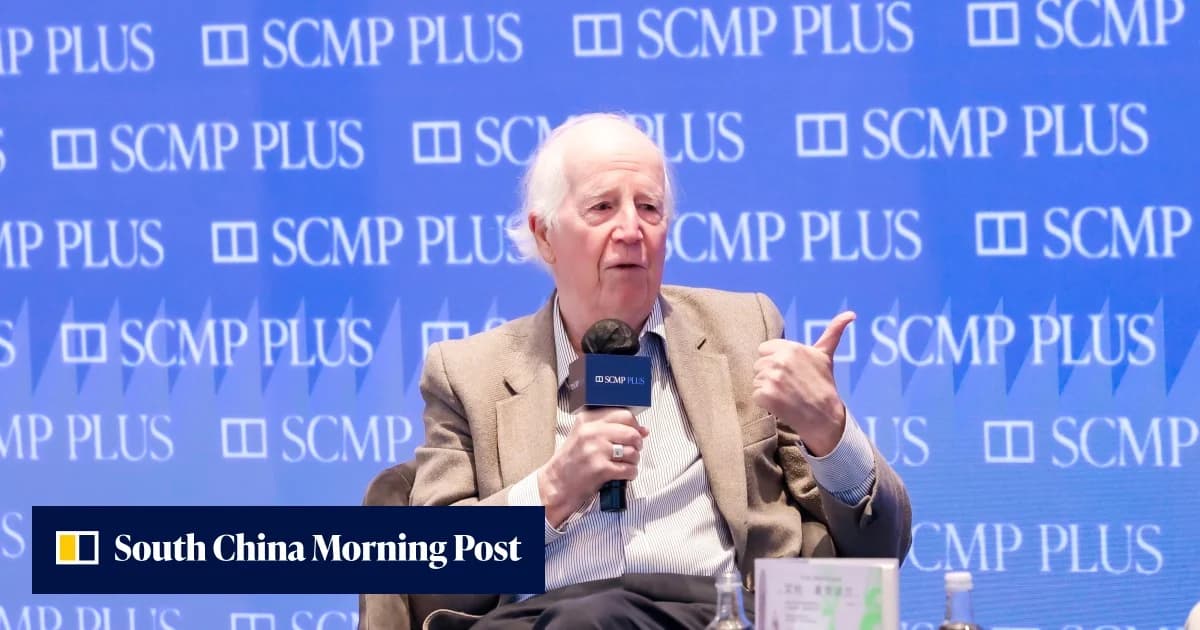
Professor Alan Macfarlane spoke with Vincent Chow, a senior AI technology reporter, during an SCMP Plus fireside chat at The Center in Central, Hong Kong, on 26 October.
Macfarlane, who serves as an emeritus professor of anthropological science at the University of Cambridge, is also a Life Fellow of King’s College. The academic stated that artificial intelligence represents another major shift in the ways humans create, preserve, and transmit knowledge. He noted that AI depends on resource-intensive physical infrastructure, which includes semiconductor manufacturing, electricity supplies, and data centres.
Macfarlane argued that the perceived intelligence of these systems stems from the human knowledge used in training and complex pattern recognition, rather than conscious experience. Chow observed that the debate in the United States focused on consciousness and new forms of intelligence. In China, Chow said the emphasis was often on everyday problem-solving and practical applications.
Cultural and philosophical traditions help shape these perspectives, Macfarlane said, influencing how societies understand technology and imagine its role in human progress. Automation could relieve people of repetitive labour, Macfarlane said, creating more time for creative pursuits, leisure, and civic life.