Key Takeaways
- Brent crude futures reached their highest level in over six weeks, rising 2%.
- US strikes on Iran and Houthi attacks on oil tankers escalated regional tensions.
- Iranian Revolutionary Guards warned of mined routes in the Strait of Hormuz.
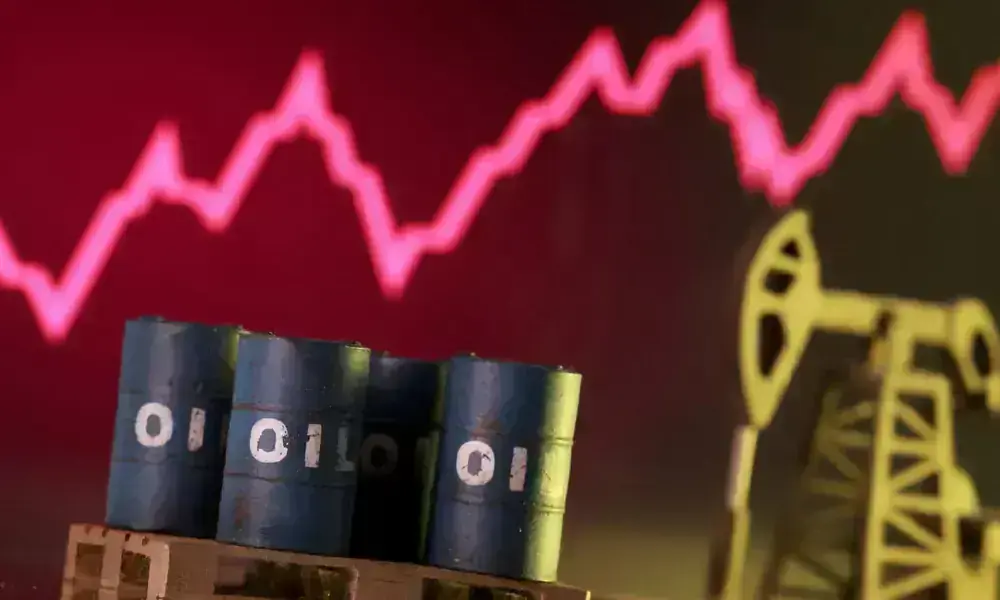
Oil prices surged to a six-week high on Thursday as escalating tensions between the United States and Iran pushed global crude futures higher. Brent crude futures rose $1.93, or 2%, to $96 by 0011 GMT, while US West Texas Intermediate (WTI) crude climbed $1.44, or 1.7%, to $88.27.
The rise in oil prices was driven by renewed hostilities between the two nations, with the United States launching a new round of strikes on Iran and Yemen’s Houthis targeting oil tankers in the Red Sea. The US military announced that it had carried out its 12th consecutive night of attacks on Iran, following President Donald Trump's vow to destroy an Iranian bridge or power plant every time Iran shoots at a ship in the Strait of Hormuz.
Iranian Revolutionary Guards reported that an oil tanker caught fire after an explosion while attempting to pass through what they described as a mined route south of the Strait of Hormuz. The guards also stated that two other tankers had turned back, warning shipping companies that the southern route was under their control and 'completely closed' due to ongoing US actions in the region.
The Iranian threat extended beyond the Strait of Hormuz; the Iran-aligned Houthis announced a naval blockade of Saudi Arabia in the Red Sea. They claimed to have carried out a military operation targeting two Saudi oil tankers, though Reuters could not immediately verify this account. The Houthi militia also warned that they had forced around 10 ships to retreat and return after warning vessels against sailing to Saudi ports.
Analysts noted that crude stocks rose by 2 million barrels last week as refinery runs eased and crude exports dropped while imports increased. This development, coupled with the heightened supply risks, led to a widening of the Brent crude three-month timespread, reaching its widest level since May 22 at $9.26 per barrel.
The surge in oil prices also reflected broader concerns about global energy security. The Houthi militia's threats against shipping in the Bab el-Mandeb Strait and their naval blockade on Saudi Arabia posed a significant risk to global energy supplies, extending beyond the Gulf region. Iranian Revolutionary Guards' spokespersons warned shipping companies that the southern route of the Strait of Hormuz was mined.
As the situation continued to escalate, oil prices remained volatile, with analysts predicting further fluctuations in the coming weeks as tensions between the US and Iran persist.