Key Takeaways
- Pakistan condemned the ongoing war crimes in Sudan's Darfur region.
- The UN Security Council discussed the International Criminal Court’s (ICC) role in investigating these incidents.
- Sudanese Armed Forces and Rapid Support Forces are involved in the conflict.
At a meeting of the United Nations Security Council, Pakistan expressed strong condemnation over the ongoing atrocities in Sudan's Darfur region. The council discussed the work of the International Criminal Court (ICC) in scrutinizing war crimes committed by both the Sudanese Armed Forces (SAF) and the Rapid Support Forces (RSF), a rebel paramilitary group.
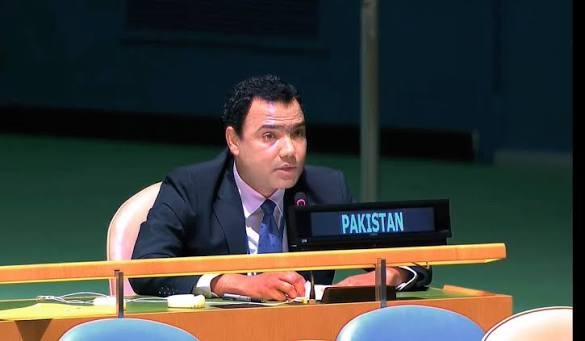
In his statement, Pakistan’s representative highlighted the 'deeply troubling' nature of the ongoing conflict. The country emphasized its commitment to international law and justice, urging for immediate action against those responsible for the atrocities in Darfur.
The ICC has been investigating allegations of war crimes, including mass killings, rapes, and forced displacement in the region since 2005. However, despite these efforts, the situation on the ground remains dire, with reports of continued violence and human rights violations.
Pakistan’s stance at the UN Security Council reflects its growing influence in international affairs and its commitment to addressing global issues such as human rights abuses. The country has consistently called for a peaceful resolution to conflicts and the protection of civilians in conflict zones.
The Rapid Support Forces, which are not part of Sudan's official military structure, have been accused of committing numerous atrocities against civilians in Darfur. Their involvement in the conflict adds complexity to efforts to bring perpetrators to justice.
While the UN Security Council acknowledged the ICC’s work, there was no consensus on how to proceed with addressing the situation in Darfur. The council called for a comprehensive approach that includes diplomatic efforts and humanitarian assistance.
Pakistan’s representative stressed the importance of cooperation between nations to address such crises. He highlighted the need for a unified front against impunity and called for stronger international mechanisms to prevent future atrocities.